Translate


Search This Blog

Featured Post

The Magic Book, c. 1100 BCE

Tales of Ancient Egypt:  Princess Ahura:  We were the two children of the King Merneptah, and he loved us very much, for he had ...

Showing posts with label XVIIIth dynasty. Show all posts

Wednesday, December 6, 2017

THE EARLIEST EGYPTIAN CONCEPTION OF THE OTHER WORLD.

Having briefly referred to the origin and development of the magical, religious, and purely funeral texts which, sometimes with and sometimes without illustrations, formed the "Guides" to the Ancient Egyptian Underworld, the form of the conceptions concerning the place of departed spirits as it appears in the Recessions of the XVIIIth and XIXth Dynasties must now be considered. 

To reconstruct the form which they took in the Pre-dynastic Period is impossible, for no materials exist, and the documents of the Early Empire are concerned chiefly with providing the deceased with an abundance of meat, drink, and other material comforts, and numbers of wives and concubines, and a place in Sekhet-Aaru, a division of Sekhet-hetepet, to which the name "Elysian Fields" has not inaptly been given. In later times Sekhet-Aaru, or Sekhet-Aanru, comprised all Sekhet-hetepet. 

Of Sekhet-hetepet as a whole the earliest known pictures are those which are painted on the coffins of Al-Barsha, and of no portion of this region have we any detailed illustrations of the occupations of its inhabitants older than the XVIIIth Dynasty. To the consideration of Sekhet-Aaru, which was the true heaven of every faithful worshiper of Osiris, from the time when he became the judge and benevolent god and friend of the dead down to the, Ptolemaïc Period, that is to say, for a period of four thousand years at least, the scribes and artists of the XVIIIth Dynasty devoted much attention, and the results of their views are set forth in the copies of PER-EM-HRU, or the Theban Book of the Dead, which have come down to us.

In one of the oldest copies of PER-EM-HRU, i.e., in the Papyrus of Nu, is a vignette of the Seven Arits, or divisions of Sekhet-Aaru; the portion shown of each Arit is the door, or gate, which is guarded by a gatekeeper, by a watcher, who reports the arrival of every comer, and by a herald, who receives and announces his name. All these beings save two have the head of an animal, or bird, on a human body, a fact which indicates the great antiquity of the ideas that underlie this vignette. Their names are:--

Arit I. Gatekeeper. SEKHET-HRA-ASHT-ARU.
Watcher. SEMETU.
Herald. HU-KHERU.

Arit II. Gatekeeper. TUN-HAT.
Watcher. SEQET-HRA.
Herald. SABES.

Arit III. Gatekeeper. AM-HUAT-ENT-PEHUI-FI.
Watcher. RES-HRA.
Herald. UAAU.

Arit IV. Gatekeeper. KHESEF-HRA-ASHT-KHERU.
Watcher. RES-AB.
Herald. NETEKA-HRA-KHESEF-ATU.

Arit V. Gatekeeper. ANKH-EM-FENTU.
Watcher. ASHEBU.
Herald. TEB-HER-KEHAAT.

Arit VI. Gatekeeper. AKEN-TAU-K-HA-KHERU.
Watcher. AN-HRA.
Herald. METES-HRA-ARI-SHE.

Arit VII. Gatekeeper. METES-SEN.
Watcher. AAA-KHERU.
Herald. KHESEF-HRA-KHEMIU.

From another place in the same papyrus, and from other papyri, we learn that the "Secret Gates of the House of Osiris in Sekhet-Aaru" were twenty-one in number; the Chapter (CXLVI.) gives the name of each Gate, and also that of each Gatekeeper up to No. X., 

thus:--

I. Gate. NEBT-SETAU-QAT-SEBT-HERT-NEBT-KHEBKHEBT-SERT-METU-KHESEFET-NESHENIU-NEHEMET-UAI-EN-I-UAU.
Gatekeeper. NERI.

II. Gate. NEBT-PET-HENT-TAUI-NESBIT-NEBT-TEMEMU-TENT-BU-NEBU.
Gatekeeper. MES-PEH. (or, MES-PTAH).


III. Gate. NEBT-KHAUT-AAT-AABET-SENETCHEMET-NETER-NEB-AM-S-HRU-KHENT-ER-ABTU.
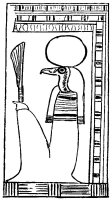
Gatekeeper. ERTAT-SEBANQA.

IV. Gate. SEKHEMET-TESU-HENT-TAUI-HETCHET-KHEFTI-NU-URT-AB-ARIT-SARU-SHUT-EM-AU.
Gatekeeper. NEKAU.

V. Gate. NEBT-REKHU-RESHT-TEBHET-TATU-AN-AQ-ERES-UN-TEP-F.
Gatekeeper. HENTI-REQU.

VI. Gate. NEBT-SENKET-AAT-HEMHEMET-AN-REKH-TU-QA-S-ER-USEKH-S-AN-QEMTU-QET-S-EM-SHAA-AU-HEFU-HER-S-AN-REKH-TENNU-MES-EN-THU-KHER-HAT-URTU-AB.
Gatekeeper. SMAMTI.

VII. Gate. AKKIT-HEBSET-BAK-AAKEBIT-MERT-SEHAP-KHAT.
Gatekeeper. AKENTI.

VIII. Gate. REKHET-BESU-AKHMET-TCHAFU-SEPT-PAU-KHAT-TET-SMAM-AN-NETCHNETCH-ATET-SESH-HER-S-EN-SENT-NAH-S.
Gatekeeper. KHU-TCHET-F.

IX. Gate. AMT-HAT-NEBT-USER-HERT-AB-MESTET-NEB-S-KHEMT-SHAA-. . . .-EM-SHEN-S-SATU-EM-UATCHET-QEMA-THESET-BES-HEBSET-BAK-FEQAT-NEB-S-RA-NEB.
Gatekeeper. TCHESEF.

X. Gate. QAT-KHERU-NEHESET-TENATU-SEBHET-ER-QA-EN-KHERU-S-NERT-NEBT-SHEFSHEFT-AN-TER-S-NETET-EM-KHENNU-S.
Gatekeeper. SEKHEN-UR.

XI. Gate. NEMT-TESU-UBTET-SEBAU-HENT-ENT-SEBKHET-NEBT-ARU-NES-AHEHI-HRU-EN-ANKHEKH.

XII. Gate. NAST-TAUI-SI-SEKSEKET-NEMMATU-EM-NEHEPU-QAHIT-NEBT-KHU-SETEMTH-KHERU-NEB-S.

XIII. Gate. STA-EN-ASAR-AAUI-F-HER-S-SEHETCHET-HAP-EM-AMENT-F.

XIV. Gate. NEBT-TENTEN-KHEBT-HER-TESHERU-ARU-NES-HAKER-HRU-EN-SETEMET-AU.

XV. Gate. BATI-TESHERU-QEMHUT-AARERT-PERT-EM-KERH-SENTCHERT-SEBA-HER-QABI-F-ERTAT-AAUI-S-EN-URTU-AB-EM-AT-F-ART-ITET-SHEM-S.

XVI. Gate. NERUTET-NEBT-AATET-KHAA-KHAU-EM-BA-EN-RETH-KHEBSU-MIT-EN-RETH-SERT-PER-QEMAMET-SHAT.

XVII. Gate. KHEBT-HER-SENF-AHBIT-NEBT-UAUIUAIT.

XVIII. Gate. MER-SETAU-AB-ABTU-MERER-S-SHAT-TEPU-AMKHIT-NEBT-AHA-UHSET-SEBAU-EM-MASHERU.

XIX. Gate. SERT-NEHEPU-EM-AHA-S-URSH-SHEMMET-NEBT-USERU-ANU-EN-TEHUTI-TCHESEF.

XX. Gate. AMT-KHEN-TEPEH-NEB-S-HEBS-REN-S-AMENT-QEMAMU-S-THETET-HATI-EN-AM-S.

XXI. Gate. TEM-SIA-ER-METUU-ARI-HEMEN-HAI-NEBAU-S.

From the above lists, and from copies of them which are found in the Papyrus of Ani, and other finely illustrated Books of the Dead, it is quite clear that, according to one view, Sekhet-Aaru, the land of the blessed, was divided into seven sections, each of which was entered through a Gate having three attendants, and that, according to other traditions, it had sections varying in number from ten to twenty-one, for each of the Gates mentioned above must have been intended to protect a division. It will be noted that the names of the Ten Gates are in reality long sentences, which make sense and can be translated, but there is little doubt that under the XVIIIth Dynasty these sentences were used as purely magical formula, or words of power, which, provided the deceased knew how to pronounce them, there was no great need to understand. In other words, it was not any goodness or virtue of his own which would enable him to pass through the Gates of Sekhet-Aaru, and disarm the opposition of their warders, but the knowledge of certain formula, or words of power, and magical names. We are thus taken back to a very remote period by these ideas, and to a time when the conceptions as to the abode of the blessed were of a purely magical character; the addition of pictures to the formula, or names, belongs to a later period, when it was thought right to strengthen them by illustrations. The deceased, who not only possessed the secret name of a god or demon, but also a picture of him whereby he could easily recognize him when he met him, was doubly armed against danger.

In addition to the Seven Arits, and the Ten, Fourteen, or Twenty-one Gates (according to the manuscript authority followed), the Sekhet-Hetepet possessed Fourteen or Fifteen Aats, or Regions, each of which was presided over by a god. 

Their names, as given in the Papyrus of Nu, are as follows:--

Aat I. AMENTET wherein a man lived on cakes and ale; its god was AMSU-QET, or MENU-QET.

Aat II. SEKHET-AARU. Its walls are of iron. The wheat here is five cubits high, the barley is seven cubits high, and the Spirits who reap them are nine cubits high. The god of this Aat is RA-HERUKHUTI.

Aat III. AATENKHU. Its god was OSIRIS or RA.

Aat IV. TUI-QAUI-AAUI. Its god was SATI-TEMUI.

Aat V. AATENKHU. The Spirits here live upon the inert and feeble. Its god was probably OSIRIS.


Aat VI. AMMEHET, which is presided over either by SEKHER-AT or SEKHER-REMUS. This was sacred to the gods, the Spirits could not find it out, and it was accursed for the dead.

Aat VII. ASES, a region of burning, fiery flame, wherein the serpent REREK lives.

Aat VIII. HA-HETEP, a region containing roaring torrents of water, and ruled over by a god called QA-HA-HETEP. A variant gives the name of this Aat as HA-SERT, and that of its god as FA-PET.


Aat IX. AKESI, a region which is unknown even to the gods; its god was MAA-THETEF, and its only inhabitant is the "god who dwelleth in his egg."
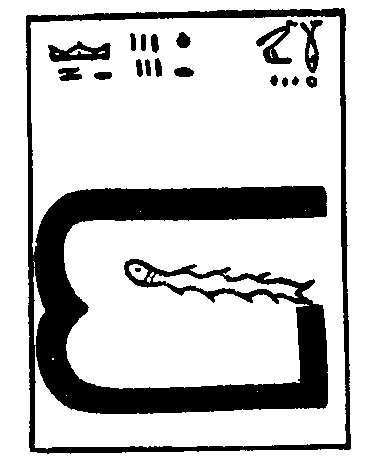
Aat X. NUT-ENT-QAHU, i.e., the city of Qahu. It was also known by the name APT-ENT-QAHU. The gods of this region appear to have been NAU, KAPET, and NEHEB-KAU.

Aat XI. ATU, the god of which was SEPT (Sothis).

Aat XII. UNT, the god of which was HETEMET-BAIU; also called ASTCHETET-EM-AMENT.

Aat XIII. UART-ENT-MU: its deity was the hippopotamus-god called HEBT-RE-F.

Aat XIV. The mountainous region of KHER-AHA, the god of which was HAP, the Nile.

A brief examination of this list of Aats, or Regions, suggests that the divisions of Sekhet-hetepet given in it are arranged in order from south to north, for it is well known that Amentet, the first Aat, was entered from the neighbourbood of Thebes, and that the last-mentioned Aat, i.e., Kher-aha, represents a region quite close to Heliopolis; if this be so, Sekhet-Aaru was probably situated at no great distance from Abydos, near which was the famous "Gap" in the mountains, whereby the spirits of the dead entered the abode set apart for them. We see from this list also that the heaven provided for the blessed was one such as an agricultural population would expect to have, and a nation of farmers would revel in the idea of living among fields of wheat and barley, the former being between seven and eight feet, and the latter between nine and ten feet high. The spirits who reaped this grain are said to have been nine cubits, i.e., over thirteen feet, in height, a statement which seems to indicate that a belief in the existence of men of exceptional height in very ancient days was extant in Egypt traditionally.

Other facts to be gleaned from the list of Aats concerning Sekhet-Aaru are that:--1. One section at least was filled with fire. 2. Another was filled with rushing, roaring waters, which swept everything away before them. 3. In another the serpent Rerek lived. 4. In another the Spirits lived upon the inert and the feeble. 5. In another lived the "Destroyer of Souls." 6. The great antiquity of the ideas about the Aats is proved by the appearance of the names of Hap, the Nile-god, Sept, or Sothis, and the Hippopotamus-goddess, Hebt-re-f, in connection with them.

The qualification for entering the Aats was not so much the living of a good life upon earth as a knowledge of the magical figures which represented them, and their names; these are given twice in the Papyrus of Nu, and as they are of great importance for the study of magical pictures they have been reproduced above.

Of the general form and the divisions of Sekhet-Aaru, or the "Field of Reeds," and Sekhet-hetepet, or the "Field of Peace," thanks to the funeral papyri of the XVIIIth Dynasty, much is known, and they may now be briefly described. From the Papyrus of Nebseni we learn that Sekhet-hetep was rectangular in shape, and that it was intersected by canals, supplied from the stream by which the whole region was enclosed. In one division were three pools of water, in another four pools, and in a third two pools; a place specially set apart was known as the "birthplace of the god of the region," and the "great company of the gods in Sekhet-hetep" occupied another section of it. At the end of a short canal was moored a boat, provided with eight oars or paddles, and each end of it terminated in a serpent's head; in it was a flight of steps. The deceased, as we see, also possessed a boat wherein he sailed about at will, but its form is different from that of the boat moored at the end of the canal. The operations of ploughing, and of seed-time and harvest, are all represented. As to the deceased himself, we see him in the act of offering incense to the "great company of the gods," and he addresses a bearded figure, which is intended probably to represent his father, or some near relation; we see him paddling in a boat, and also sitting on a chair of state smelling a flower, with a table of offerings before him. None of the inscriptions mentions Sekhet-Aaru, but it is distinctly said that the reaping of the grain by the deceased is taking place in Sekhet-hetep, or Sekhet-hetepet.

In chronological order the next picture of Sekhet-hetepet to be considered is that from the Papyrus of Ani, and it will be seen at a glance that in details it differs from that already described. Ani adores the gods in the first division, but he burns no incense; the boat in which he paddles is loaded with offerings, and he is seen dedicating an offering to the bearded figure. The legend reads, "Living in peace in Sekhet--winds for the nostrils." The second division contains scenes of' reaping and treading out of corn, but only three pools of water instead of four. In the third division we see An! ploughing the land by the side of a stream of untold length and breadth, which is said to contain neither fish nor worms. It is important to note that this division is described as SEKHET-AANRU. The eyot which represents the birthplace of the god of the city has no title, and the larger island, which is separated from it by a very narrow strip of ground, contains a flight of steps, but no gods. In the left-hand corner is a place which is described as "the seat of the Spirits, who are seven cubits in height"; the "grain is three cubits high, and it is the perfect Spirits who reap it." In the other portion of this section are two boats instead of one as in the Papyrus of Nebseni.

In connection with the two pictures of Sekhet-hetepet described above, it is important to consider the text which accompanies the older of them, i.e., that of the Papyrus of Nebseni. The deceased is made to say that he sails over the Lake of Hetep (i.e., Peace) in a boat which he brought from the house of Shu, and that he has come to the city of Hetep under the favour of the god of the region, who is also called Hetep. He says, "My mouth is strong, I am equipped [with words of power to use as weapons] against the Spirits let them not have dominion over me. Let me be rewarded with thy fields, O thou god Hetep. That which is thy wish do, O lord of the winds. May I become a spirit therein, may I eat therein, may I drink therein, may I plough therein, may I reap therein, may I fight therein, may I make love therein, may my words be powerful therein, may I never be in a state of servitude therein, and may I be in authority therein . . . . . . [Let me] live with the god Hetep, clothed, and not despoiled by the 'lords of the north,' and may the lords of divine things bring food unto me. May he make me to go forward and may I come forth; may he bring my power to me there, may I receive it, and may my equipment be from the god Hetep. May I gain dominion over the great and mighty word which is in my body in this my place, and by it I shall have memory and not forget." The pools and places in Sekhet-hetepet which the deceased mentions as having a desire to visit are UNEN-EM-HETEP, the first large division of the region; NEBT-TAUI, a pool in the second division; NUT-URT, a pool in the first division; UAKH, a pool in the second division, where the kau, or "doubles," dwell; TCHEFET, a portion of the third division, wherein the deceased arrays himself in the apparel of Ra; UNEN-EM-HETEP, the birthplace of the Great God; QENQENTET, a pool in the first division, where he sees his father, and looks upon his mother, and has intercourse with his wife, and where he catches worms and serpents and frees himself from them; the Lake of TCHESERT, wherein he plunges, and so cleanses himself from all impurities; HAST, where the god ARI-EN-AB-F binds on his head for him; USERT, a pool in the first division, and SMAM, a pool in the third division of Sekhet-hetepet. Having visited all these places, and recited all the words of power with which he was provided, and ascribed praises to the gods, the deceased brings his boat to anchor, and, presumably, takes up his abode in the Field of Peace for ever.

From the extract from the Chapter of Sekhet-Aaru and Sekhet-hetepet given above, it is quite clear that the followers of Osiris hoped and expected to do in the next world exactly what they had done in this, and that they believed they would obtain and continue to live their life in the world to come by means of a word of power; and that they prayed to the god Hetep for dominion over it, so that they might keep it firmly in their memories, and not forget it. This is another proof that in the earliest times men relied in their hope of a future life more on the learning and remembering of a potent name or formula than on the merits of their moral and religious excellences. From first to last throughout the chapter there is no mention of the god Osiris, unless he be the "Great God" whose birthplace is said to be in the region Unen-em-hetep, and nowhere in it is there any suggestion that the permission or favour of Osiris is necessary for those who would enter either Sekhet-Aaru or Sekhet-hetep. This seems to indicate that the conceptions about the Other World, at least so far as the "realms of the blest" were concerned, were evolved in the minds of Egyptian theologians before Osiris attained to the high position which he occupied in the Dynastic Period. On the other hand, the evidence on this point which is to be deduced from the Papyrus of Ani must be taken into account.

At the beginning of this Papyrus we have first of all Hymns to Ra and Osiris, and the famous Judgment Scene which is familiar to all. We see the heart of Ani being weighed in the Balance against the symbol of righteousness in the presence of the Great Company of the Gods, and the weighing takes place at one end of the house of Osiris, whilst Osiris sits in his shrine at the other. The "guardian of the Balance" is Anubis, and the registrar is Thoth, the scribe of the gods, who is seen noting the result of the weighing. In the picture the beam of the Balance is quite level, which shows that the heart of Ani exactly counterbalances the symbol of righteousness. 

This result Thoth announces to the gods in the following words, "In very truth the heart of Osiris hath been weighed, and his soul hath stood as a witness for him; its case is right (i.e., it hath been found true by trial) in the Great Balance. No wickedness hath been found in him, he hath not purloined the offerings in the temples, and he hath done no evil by deed or word whilst he was upon earth." The gods in their reply accept Thoth's report, and declare that, so far as they are concerned, Ani has committed neither sin nor evil. 

Further, they go on to say that he shall not be delivered over to the monster Amemet, and they order that he shall have offerings, that he shall have the power to go into the presence of Osiris, and that he shall have a homestead, or allotment, in Sekhet-hetepet for ever. We next see Ani being led into the presence of Osiris by Horus, the son of Isis, who reports that the heart of Ani hath sinned against no god or goddess; as it hath also been found just and righteous according to the written laws of the gods, he asks that Ani may have cakes and ale given to him, and the power to appear before Osiris, and that he may take his place among the "Followers of Horus," and be like them for ever.

Now from this evidence it is clear that Ani was considered to have merited his reward in Sekhet-hetepet by the righteousness and integrity of his life upon earth as regards his fellow-man, and by the reverence and worship which he paid to every god and every goddess; in other words, it is made to appear that he had earned his reward, or had justified himself by his works. Because his heart had emerged triumphantly from its trial the gods decreed for him the right to appear in the presence of the god Osiris, and ordered him to be provided with a homestead in Sekhet-hetep. There is no mention of any repentance on Ani's part for wrong done; indeed, he says definitely, "There is no sin in my body.

I have not uttered wittingly that which is untrue, and I have committed no act having a double motive [in my mind]." As he was troubled by no remembrance of sin, his conscience was clear, and he expected to receive his reward, not as an act of mercy on the part of the gods, but as an act of justice. Thus it would seem that repentance played no part in the religion of the primitive inhabitants of Egypt, and that a man atoned for his misdeeds by the giving of offerings, by sacrifice, and by worship. On the other hand, Nebseni is made to say to the god of Sekhet-hetep, 

"Let me be rewarded with thy fields, O Hetep; but do thou according to thy will, O lord of the winds." 

This petition reveals a frame of mind which recognizes submissively the omnipotence of the god's will, and the words "do thou according to thy will" are no doubt the equivalent of those which men of all nations and in every age have prayed--

"Thy will be done."

The descriptions of the pictures of Sekhet-hetep given above make it evident that the views expressed in the Papyrus of Nebseni differ in some important details from those which we find in the Papyrus of Ani, but whether this difference is due to some general development in religious thought, which took place in the interval between the periods when the papyri were written, cannot be said. There is abundant evidence in the Papyrus of Ani that Ani himself was a very religious man, and we are not assuming too much when we say that he was the type of a devout worshipper of Osiris, whose beliefs, though in some respects of a highly spiritual character, were influenced by the magic and gross material views which seem to have been inseparable from the religion of every Egyptian. 

Though intensely logical in some of their views about the Other World, the Egyptians were very illogical in others, and they appear to have seen neither difficulty nor absurdity in holding at the same time beliefs which were inconsistent and contradictory. It must, however, in fairness be said that this characteristic was due partly to their innate conservatism in religious matters, and their respect for the written word, and partly to their fear that they might prejudice their interests in the future life if they rejected any scripture or picture which antiquity, or religious custom, or tradition had sanctioned.

Certain examples, however, prove that the Egyptians of one period were not afraid to modify or develop ideas which had come down to them from another, as may be seen from the accompanying illustration.


This picture is intended to represent Sekhet-hetepet, and is taken from the inner coffin of Kua-Tep, which was found at Al-Barsha, and is now in the British Museum (No. 30,840); it dates front the period of the XIth Dynasty. From this we see that the country of the blessed was rectangular in shape, and surrounded by water, and intersected by streams, and that, in addition to large tracts of land, there were numbers of eyots belonging to it. In many pictures these eyots are confounded with lakes, but it is pretty clear that the "Islands of the Blessed" were either fertile eyots, or oases which appeared to be green islands in a sea of sand. Near the first section were three, near the second four, near the third four, three, being oval, and one triangular; the fourth section was divided into three parts by means of a canal with two arms, and contained the birthplace of the god, and near it were seven eyots; the fifth is the smallest division of all, and has only one eyot near it. Each eyot has a name which accorded with its chief characteristic; the dimensions of three of the streams or divisions are given, the region where ploughing takes place is indicated, and the positions of the staircase and the mystic boat are clearly shown. The name of the god Hetep occurs twice, and that of Osiris once.

If now we compare this picture with that front the Papyrus of Nebseni we shall find that the actual operations of ploughing, reaping, and treading out of the corn are depicted on the Papyrus, and that several figures of gods and the deceased have been added. The text speaks of offerings made by the deceased, and of his sailing in a boat, &c., therefore the artist added scenes in which he is depicted doing these things; and the lower part of the picture in the Papyrus has been modified considerably. In the second division it may be noted that Nebseni is seen laying both hands on the back of the Bennu bird; there is no authority for this in the older copy of the picture. 


In this illustration on which is reproduced from the coffin of Sen, in the British Museum (No. 30,841), a still simpler form of Sekhet-hetepet is seen; here we have only nine eyots, which are grouped together, and no inscription of any kind.

Still further modifications were introduced into the pictures of Sekhet-hetepet drawn in later times, and, in order that the reader may be enabled to trace some of the most striking of these, copies of Sekhet-hetepet from the Papyrus of Anhai (about B.C. 1040), and from that of Auf-ankh (Ptolemaïc Period)

Tuesday, November 21, 2017

The Magic Book, c. 1100 BCE


Tales of Ancient Egypt: 
Princess Ahura: 

We were the two children of the King Merneptah, and he loved us very much, for he had no others; and Naneferkaptah was in his palace as heir over all the land. And when we were grown, the king said to the queen, "I will marry Naneferkaptah to the daughter of a general, and Ahura to the son of another general." And the queen said, "No, he is the heir, let him marry his sister, like the heir of a king, none other is fit for him." And the king said, " That is not fair; they had better be married to the children of the general." And the queen said, "It is you who are not dealing rightly with me." And the king answered, "If I have no more than these two children, is it right that they should marry one another? I will marry Naneferkaptah to the daughter of an officer, and Ahura to the son of another officer. It has often been done so in our family."

And at a time when there was a great feast before the king, they came to fetch me to the feast. And I was very troubled, and did not behave as I used to do. And the king said to me, "Ahura, have you sent some one to me about this sorry matter, saying, "Let me be married to my elder brother?'" I said to him, "Well, let me marry the son of an officer, and he marry the daughter of another officer, as it often happens so in our family." I laughed, and the king laughed. And the king told the steward of the palace,"Let them take Ahura to the house of Naneferkaptah tonight, and all kinds of good things with her." So they brought me as a wife to the house of Naneferkaptah; and the king ordered them to give me presents of silver and gold, and things from the palace.

And Naneferkaptah passed a happy time with me, and received all the presents from the palace; and we loved one another. And when I expected a child, they told the king, and he was most heartily glad; and he sent me many things, and a present of the best silver and gold and linen. And when the time came, I bore this little child that is before you. And they gave him the name of Merab, and registered him in the book of the "House of Life."

And when my brother Naneferkaptah went to the cemetery of Memphis, he did nothing on earth but read the writings that are in the catacombs of the kings and on the tablets of the "House of Life," and the inscriptions that are seen on the monuments, and he worked hard on the writings. And there was a priest there called Nesiptah; and as Naneferkaptah went into a temple to pray, it happened that he went behind this priest, and was reading the inscriptions that were on the chapels of the gods. And the priest mocked him and laughed. So Naneferkaptah said to him, "Why are you laughing at me? "And he replied, "I was not laughing at you, or if I happened to do so, it was at your reading writings that are worthless. If you wish so much to read writings, come to me, and I will bring you to the place where the book is that Thoth himself wrote with his own hand, and which will bring you to the gods. When you read but two pages in this, you will enchant the heaven, the earth, the abyss, the mountains, and the sea; you shall know what the birds of the sky and the crawling things are saying; you shall see the fishes of the deep, for a divine power is there to bring them up out of the depth. And when you read the second page, if you are in the world of ghosts, you will become again in the shape you were in on earth. You will see the sun shining in the sky, with all the gods, and the full moon."

And Naneferkaptah said, "By the life of the king! Tell me of anything you want done, and I'll do it for you, if you will only send me where this book is." And the priest answered Naneferkaptah, "If you want to go to the place where the book is, you must give me a hundred pieces of silver for my funeral, and provide that they shall bury me as a rich priest." So Naneferkaptah called his lad and told him to give the priest a hundred pieces of silver; and he made them do as he wished, even everything that he asked for. Then the priest said to Naneferkaptah, "This book is in the middle of the river at Koptos, in an iron box; in the iron box is a bronze box; in the bronze box is a sycamore box; in the sycamore box is an ivory and ebony box; in the ivory and ebony box is a silver box; in the silver box is a golden box; and in that is the book. It is twisted all round with snakes and scorpions and all the other crawling things around the box in which the book is; and there is a deathless snake by the box." And when the priest told Naneferkaptah, he did not know where on earth he was, he was so much delighted.

And when he came from the temple, he told me all that had happened to him. And he said, "I shall go to Koptos, for I must fetch this book; I will not stay any longer in the north." And I said, "Let me dissuade you, for you prepare sorrow and you will bring me into trouble in the Thebaid." And I laid my hand on Naneferkaptah, to keep him from going to Koptos, but he would not listen to me; and he went to the king, and told the king all that the priest had said. The king asked him, "What is it that you want?" And he replied, "Let them give me the royal boat with its belongings, for I will go to the south with Ahura and her little boy Merab, and fetch this book without delay." So they gave him the royal boat with its belongings, and we went with him to the haven, and sailed from there up to Koptos.

Then the priests of Isis of Koptos, and the high priest of Isis, came down to us without waiting, to meet Naneferkaptah, and their wives also came to me. We went into the temple of Isis and Harpokrates; and Naneferkaptah brought an ox, a goose, and some wine, and made a burnt offering and a drink offering before Isis of Koptos and Harpokrates. They brought us to a very fine house, with all good things; and Naneferkaptah spent four days there and feasted with the priests of Isis of

Koptos, and the wives of the priests of Isis also made holiday with me.

And the morning of the fifth day came; and Naneferkaptah called a priest to him, and made a magic cabin that was full of men and tackle. He put the spell upon it and put life into it, and gave them breath, and sank it in the water. He filled the royal boat with sand, and took leave of me, and sailed from the haven: and I sat by the river at Koptos that I might see what would become of him. And he said, "Workmen, work for me, even at the place where the book is." And they toiled by night and by day; and when they had reached it in three days, he threw the sand out and made a shoal in the river. And then he found on it entwined serpents and scorpions, and all kinds of crawling things around the box in which the book was; and by it he found a deathless snake around the box. And he laid the spell upon the entwined serpents and scorpions and all kinds of crawling things which were around the box, that they would not come out. And he went to the deathless snake, and fought with him, and killed him; but he came to life again, and took a new form. He then fought again with him a second time; but he came to life again, and took a third form. He then cut him in two parts, and put sand between the parts, that he should not appear again.

Naneferkaptah then went to the place where he found the box. He uncovered a box of iron, and opened it; he found then a box of bronze, and opened that; then he found a box of sycamore wood, and opened that; again he found a box of ivory and ebony, and opened that; yet, he found a box of silver, and opened that; and then he found a box of gold; he opened that, and found the book in it. He took the book from the golden box, and read a page of spells from it. He enchanted the heaven and the earth, the abyss, the mountains, and the sea; he knew what the birds of the sky, the fish of the deep, and the beasts of the hills all said. He read another page of the spells, and saw the sun shining in the sky, with all the gods, the full moon, and the stars in their shapes; he saw the fishes of the deep, for a divine power was present that brought them up from the water. He then read the spell upon the workmen that he had made, and taken from the haven, and said to them, "Work for me, back to the place from which I came." And they toiled night and day, and so he came back to the place where I sat by the river of Koptos; I had not drunk nor eaten anything, and had done nothing on earth, but sat like one who is gone to the grave.

I then told Naneferkaptah that I wished to see this book, for which we had taken so much trouble. He gave the book into my hands; and when I read a page of the spells in it, I also enchanted heaven and earth, the abyss, the mountains, and the sea; I also knew what the birds of the sky, the fishes of the deep, and the beasts of the hills all said. I read another page of the spells, and I saw the sun shining in the sky with all the gods, the full moon, and the stars in their shapes; I saw the fishes of the deep, for a divine power was present that brought them up from the water. As I could not write, I asked Naneferkaptah, who was a good writer and a very learned one; he called for a new piece of papyrus, and wrote on it all that was in the book before him. He dipped it in beer, and washed it off in the liquid; for he knew that if it were washed off, and he drank it, he would know all that there was in the writing.

We went back to Koptos the same day, and made a feast before Isis of Koptos and Harpokrates. We then went to the haven and sailed, and went northward of Koptos. And as we went on, Thoth discovered all that Naneferkaptah had done with the book; and Thoth hastened to tell Ra, and said, "Now, know that my book and my revelation are with Naneferkaptah, son of the King Merneptah. He has forced himself into my place, and robbed it, and seized my box with the writings, and killed my guards who protected it." And Ra replied to him, "He is before you, take him and all his kin." He sent a power from heaven with the command, "Do not let Naneferkaptah return safe to Memphis with all his kin." And after this hour, the little boy Merab, going out from the awning of the royal boat, fell into the river: he called on Ra, and everybody who was on the bank raised a cry. Naneferkaptah went out of the cabin, and read the spell over him; he brought the body up because a divine power brought him to the surface. He read another spell over him, and made him tell of all that happened to him, and of what Thoth had said before Ra. We turned back with him to Koptos. We brought him to the Good House, we fetched the people to him, and made one embalm him; and we buried him in his coffin in the cemetery of Koptos like a great and noble person.

And Naneferkaptah, my brother, said, "Let us go down, let us not delay, for the king has not yet heard of what has happened to him, and his heart will be sad about it." So we went to the haven, we sailed, and did not stay to the north of Koptos. When we were come to the place where the little boy Merab had fallen into the water, I went out from the awning of the royal boat, and I fell into the river. They called Naneferkaptah, and he came out from the cabin of the royal boat. He read a spell over me, and brought my body up, because a divine power brought me to the surface. He drew me out, and read the spell over me, and made me tell him of all that had happened to me, and of what Thoth had said before Ra. Then he turned back with me to Koptos, he brought me to the Good House, he fetched the people to me, and made one embalm me, as great and noble people are buried, and laid me in the tomb where Merab my young child was.

He turned to the haven, and sailed down, and delayed not in the northof Koptos. When he was come to the place where we fell into the river, he said to his heart, "Shall I not better turn back again to Koptos, that I may lie by them? For if not, when I go down to Memphis, and the king asks after his children, what shall I say to him? Can I tell him, "I have taken your children to the Thebaid and killed them, while I remained alive, and I have come to Memphis still alive?=" Then he made them bring him a linen cloth of striped byssus; he made a band, and bound the book firmly, and tied it upon him. Naneferkaptah then went out of the awning of the royal boat and fell into the river. He cried on Ra; and all those who were on the bank made an outcry, saying, "Great woe! Sad woe! Is he lost, that good scribe and able man that has no equal?"

The royal boat went on without any one on earth knowing where Naneferkaptah was. It went on to Memphis, and they told all this to the king. Then the king went down to the royal boat in mourning, and all the soldiers and high priests and priests of Ptah were in mourning, and all the officials and courtiers. And when he saw Naneferkaptah, who was in the inner cabin of the royal boat---from his rank of high scribe---he lifted him up. And they saw the book by him; and the king said, "Let one hide this book that is with him." And the officers of the king, the priests of Ptah, and the high priest of Ptah, said to the king, "Our Lord, may the king live as long as the sun! Naneferkaptah was a good scribe and a very skillful man." And the king had him laid in his Good House to the sixteenth day, and then had him wrapped to the thirty-fifth day, and laid him out to the seventieth day, and then had him put in his grave in his resting-place.

Sunday, July 30, 2017

Lecture: THE CULT OF ATEN, THE GOD AND DISK OF THE SUN, ITS ORIGIN,

Horus
Among all the mass of the religious literature of Ancient Egypt, there is no document that may be considered to contain a reasoned and connected account of the ideas and beliefs which the Egyptians associated with the god Aten. The causes of his rise into favor towards the close of the XVIIIth dynasty can be surmised, and the principal dogmas which the founder of his cult and his followers promulgated are discover-able in the Hymns that are found on the walls of the rock-hewn tombs of Tall al-'Amarnah; but the true history of the rise, development and fall of the cult can never be completely known. The word aten or athen is a very old word for the "disk" or "face of the sun," and Atenism was beyond doubt an old form of worship of the sun. But there were many forms of sun-worship older than the cult of Aten, and several solar gods were worshiped in Egypt many. many centuries before Aten was regarded as a special form of the great solar god at all. One of the oldest forms of the Sun-god worshiped in Egypt was HER (Horus), who in the earliest times seems to have represented the "height" or "face" of heaven by day. He was symbolized by the sparrowhawk, the right eye of the bird representing the sun and his left the moon.


Nephthys
In later times he was called "Her-ur" or "Her-sems," the "older Horus," and it was he who fought daily against Set, the darkness of night and the night Sky, and triumphed over him.

The oldest seat of the cult of the Sun-god was the famous city of Anu the On of the Bible, and the Heliopolis of Greek and Latin writers.

Here, from time immemorial, existed a temple dedicated to the Sun-god, and attached to it was a college of his priests, who from a very remote period were renowned for their wisdom and learning. They called their god TEM or ATEM and in later times, at least, he was depicted in the form of a man wearing the Crowns of the South and North, and holding in his right hand ankh ("life") and in his left a sceptre. He was king of heaven and also of Egypt. He was a solar god and, like every other ancient god in Egypt, had absorbed the attributes of several indigenous gods whose names even are now not known. The Pyramid Texts show that he was all-powerful in heaven, and that his priests proclaimed him to be the greatest of all the gods. The supremacy of Tem is asserted in the various versions of the Book of the Dead, and all the other solar gods are regarded as forms of him in the various recensions of this work. Thus in the XVIIth Chapter he says: "I am Tem in his rising. I was the Only One [when] I came into existence in Nenu (or Nu). I am Ra when he rose for the first time. I am the Great God who created himself [from] Nenu, and who made his names to become the gods of his company. I am he who is irresistible among the gods. I am Tem, the dweller in his Disk, or Ra in his rising in the eastern horizon of the sky. I am Yesterday; I know To-day 'I am the Bennu (i.e., Phoenix) which is in Anu (Heliopolis), and I keep the register of the things which are created and of those which are not yet in existence." The Company of the gods over whom "Father Tem" presided consisted of Shu and Tefnut, Geb and Nut, Osiris and Isis, and Set and Nephthys. According to one tradition, Tem produced Shu and Tefnut from his own body, and these three gods formed the first Triad, or Trinity, Tem saying, "From [being] god one I became three."


Shu, son of Ra,
In the extract from the XVIIth Chapter given above, we must note that 1. Tem originally existed in Nenu, or Nu, the great mass of primeval waters. 2. He was the Only One in existence when he had come into being. 3. He created himself the Great God. 4. He possessed various names, and these he turned into the gods who formed his Pest or Ennead, merely by uttering their names. 5. He was irresistible among the gods, i.e., he was the Over-lord of the gods. 6. He comprehended time past and time to come. 7. He dwelt in the Solar Disk (Aten). 8. He rose in the sky for the first time under the form of Ra, and he was himself the Bennu, i.e., the Soul of Ra. 9. He kept the Registers of things created and uncreated. Though the papyrus from which we get these facts is not older than the XVIIIth dynasty, each of the statements which are here grouped exists in the various religious texts that were written under the Ancient Empire, say, two thousand years earlier.

Of the style and nature of the worship of Tem we know nothing, but, from the fact that he was depicted in the form of a man, we appear to be justified in assuming that it was of a character superior to that of the cults of sacred animals, birds and reptiles, which were general in Egypt under the earlier dynasties. Tem, the man-god, absorbed the attributes of Her-ur, the old Sky-god, and of Khepera, the Beetle-god, who represented one or more of the forms of an ancient Sun-god between sunset and sunrise, and of Her-aakhuti ("Horus of the two horizons"). Khepera was the sun during the hour that precedes the dawn. Her was the sun by day, and Tem was the setting sun; the names of these gods are of native origin. We may conclude that the priests of Tem incorporated into their forms of worship as many as possible of the rites and ceremonies to which the people had been accustomed in their worship of the older gods. For there was nothing strange in the absorption of one god by another to the Egyptian, the god absorbed being regarded by him merely as a phase or character of the absorbing god. The Egyptians, like many other Orientals, were exceedingly tolerant in such matters.
Tefnut,

The monuments prove that, quite early in the Dynastic Period, there was known and worshiped in Lower Egypt another form of the Sun-god who was called RA. Of his origin and early history nothing is known, and the meaning of his name has not yet been satisfactorily explained. It does not seem to be Egyptian, but it may be that of some Asiatic sun-god, whose cult was introduced into Egypt at a very remote period. His character and attributes closely resemble those of the Babylonian god Marduk, and both Ra and Marduk may be only different names of one and the same ancestor. The center of the cult of Ra in Egypt was Anu, or Heliopolis, and the city must have been inhabited by a cosmopolitan population (who were chiefly worshipers of the sun) from time immemorial. All the caravans from Arabia and Syria halted there, whether outward or homeward bound, and men of many nations and tongues must have exchanged ideas there as well as commodities. The control of the water drawn from the famous Well of the Sun, the 'Ain ash-Shams' of Arab writers, was, no doubt, in the hands of the priests of Anu, and the payments made by grateful travelers for the watering of their beasts, together with other offerings, made them rich and powerful. The waters of the well were believed to spring from the celestial waters of Nenu, or Nu, and the Nubian King Piankhi tells us that when he went to Anu he bathed his face in the water in which Ra was wont to bathe his face. We may note in passing that the Virgin Mary drew water from this well when the Holy Family halted at Anu.
Osiris,

Under the IVth dynasty the priests of Anu obtained very considerable power, and they succeeded in acquiring pre-eminence for their god Ra among the other gods of Lower Egypt. Whether or not they chose the kings cannot be said, but it is certain that they caused the name of Ra to form a part of the Nesu bat names of the builders of the second and third pyramids at Gizah. Thus we have KHAF-RA (Khephren) and MENKAU-RA (Mycerinus). Not satisfied with this, they rejected the descendants of the great pyramid builders, and set upon the throne a number of kings whom they declared to be the sons of their god Ra by the wife of one of his priests. The first of these adopted as his fifth, or personal name, the title of "Sa Ra," i.e., son of Ra. This title, which was certainly adopted by the kings of the Vth dynasty, was borne by every king of Egypt afterwords, and the Nubian, Persian, Macedonian, or Roman who became king of Egypt saw no absurdity in styling himself "son of Ra." Thanks to the excavations made by Borchardt and Schäfer, under the direction of F. von Bissing, several important facts dealing with the worship of Ra have been brought to light. The sun temples built by the later kings of the Vth dynasty were usually buildings about 325 feet long and 245 feet broad. At the west end stood a truncated, or "blunted," pyramid (A), and on the top of it was an obelisk made of stone (B). In front of the east side of the pyramid stood an alabaster B altar, and on the north side of the altar were channels along which the blood of the victims, both A animal and human, ran into alabaster bowls which were placed to receive it. On the north side of the rectangular walled enclosure was a row of store rooms, and on the east and south sides were passages, the walls of which were decorated with reliefs. Opposite the altar, on the east side, was a gateway; from this ran a path, which led by an inclined causeway to another gate, Which formed the entrance to another large enclosure, about 1,000 feet square. The priests lived in this enclosure, and in special chambers were kept the sacred objects which were carried in procession on days of festival.
Isis

The principal object of the cult of Ra and his special symbol was the obelisk, but it has been suggested that the earliest worshippers of the sun believed that their god dwelt in a particular stone of pyramidal shape. At stated seasons, or for special purposes, the Spirit of the Sun was induced by the priests to inhabit the stone, and it was believed to be present when gifts were offered up to the god, and when human victims, who were generally prisoners of war, were sacrificed. The exact signification of this sun symbol is not known. Some think that the obelisk represented the axis of earth and heaven, but the Egyptians can hardly have evolved such an idea; others assign to it a phallic signification, and others associate it with an object that produced fire and heat. That it symbolized Ra is certain, and there was in every sanctuary a shrine in which, behind sealed doors, was a model of an obelisk. The cult of the standing stone, or pillar, was probably older than the cult of Ra, and the old name of Heliopolis is Anu, i.e., the city of the pillar. The Spirit of the Sun visited the temple of the sun from time to time in the form of a Bennu bird, and alighted "on the Ben-stone, 1 in the house of the Bennu in Anu in later times the Bennu-bird, which the Egyptians regarded as the "soul of RA," was known as the Phoinix, or Phœnix.

Under the VIth dynasty the priests of Ra succeeded in thrusting their god into the position of over-lord of all the gods, and as we see from the names Ra-Khepera, Ra-Atem, Ra-Heraakhuti and the like, all the old solar gods of the north of Egypt were regarded as forms of Ra. He was king of heaven and judge of gods and men, and the attempt was also made to make the people accept him as the over-lord of Osiris and king of the Tuat, or Underworld. But in this last matter the priests failed, and Osiris maintained his position as the god and judge of the dead. The priests had assigned to Ra in the funerary compositions, which are now known as the "Pyramid Texts," great powers over the dead, and, in fact, over all the gods and demons and denizens of the underworld, but before a century had passed, Osiris had established absolute sovereignty over his realm of Amentt.

From what has been said above it is evident that, before the close of the VIth dynasty, the priests of the various solar gods of Lower Egypt had assigned to each of them all the essential powers and characteristics which Amenhetep claimed for his god Aten. But before we consider these powers in detail we must summarize briefly the principal historical facts relating to the rise and development of the Aten cult. Wherever a solar god was worshipped in Egypt the habitat of this god was believed to be the solar Disk (aten or athen) But the oldest solar god who was associated with the Disk was Tem, or Atmu, who is frequently referred to in religious texts as "Tem in his Disk"; when Ra usurped the attributes of Tem he became the "dweller in his Disk." Heraakhuti was the "god of the two horizons," i.e., the Sun-god by day, from sunrise to sunset, and in the hieroglyphs with which his name is written, we see the Disk resting upon the horizon of the east and the horizon of the west. Thothmes IV, who owed his throne to the priesthoods of Tem and Ra at Heliopolis, incorporated the name of Tem in his Nebti title, and styled himself "made of Ra," "chosen of Ra," and "beloved of Ra." As the name of Amen is wanting in every one of his titles, it seems reasonable to assume that his personal sympathies lay with the cult of the solar gods of the North and not with the cult of Amen of Thebes. But he maintained good relations with the priests of Amen, and made gifts to their god, who through the victories of Thothmes III was recognized in the Egyptian Win, Egypt, and Syria as the god of all the world.

Thothmes IV was succeeded by his son Amenhetep, the third king to bear the name, and the priesthood of Thebes asserted that he was the veritable son of their god Amen, whose blood ran in his veins. According to this fiction the god assumed the form of Thothmes IV, and Queen Mutemuaa became with child by him. How much or how little religious instruction the child received cannot be said, but it is probable that any teaching which he received from his mother, the princess of Mitanni, would make his mind to incline towards the religion of her native land. From the titles which Amenhetep assumed when he became king it is clear that he was content to be "the chosen of Ra," "the chosen of Tem," or "the chosen of Amen," and it seems to have mattered little to him whether he was the "beloved" and "emanation of Ra" or the "beloved" and "emanation of Amen." His predecessors on the throne of Egypt believed in all seriousness that they had divine blood in their veins, and they acted as they thought gods would act; they had themselves hedged round with elaborate ceremonial procedure, which made men believe that their king was a god. To Amenhetep all the gods of Egypt were alike, and we see from the bas-reliefs in the temple at Sulb, some fifty miles above the head of the Second Cataract, that he was as willing to worship himself and to offer sacrifices to himself as to Amen, in whose honour he had rebuilt the temple. It is impossible to think of his performing daily the rites and ceremonies which the king of Egypt was expected to perform in the shrine of Amen-Ra at Karnak, in order to obtain from the god the power and knowledge necessary for governing his people.

One of the most important events in his life, and one fraught with very far-reaching consequences, was his marriage with the lady Ti (or Tei), a private individual, apparently of no high rank or social position. In the Tall al-'Amarnah letters her name is transcribed Tei. Her father was called Iuau, and her mother Thuau. Their tomb was discovered in 1905, and it is clear that before the marriage of their daughter to Amenhetep III they were humble folk. According to a consensus of modern Egyptological opinion they were natives of Egypt, not foreigners as the older Egyptologists supposed. Be this as it may, there is no doubt that Ti was a very remarkable woman and that her influence over her husband was very great. Her name appears in the inscriptions side by side with that of her husband, a fact which proves that he acknowledged her authority as co-ruler with himself; and she assisted at public functions and in acts of ceremonial worship in a manner unknown to queens in Egypt before her time. Her power inside the palace and in the country generally was very great, and there is evidence that the king's orders, both private and public, were only issued after she had sanctioned them. In the Sudan the king was worshipped as a god, and as the son and equal and counterpart of Amen-Ra, and in the temple which Amenhetep built for her at Saddenga, some twenty or thirty miles south of Koshah, Ti was worshipped as a goddess. When Amenhetep married her, or perhaps when he became king, he caused a number of unusually large steatite scarabs to be made, with his names and titles and those of Ti cut side by side on their bases. On another group of large scarabs he caused his own names and titles, and the names of Ti and her father Iuau and mother Thuau, to be cut, and these are followed by the statement, "[She is] the wife of the victorious king whose territory in the South reaches to Karei (i.e., Napata, at the foot of the Fourth Cataract) and in the North to Naharn" (i.e. the country of the head waters of the Euphrates). Perhaps this is another way of saying the great and mighty king Amenhetep was proud to marry the daughter of parents of humble birth and to give her a position equal to his own. And it is possible, as Maspero suggested long ago, that some romantic episode is here referred to, similar to that in the old story where the king marries a shepherdess for love. What Ti's religious views were, or what gods she worshipped, we have no means of knowing, but the inscription which is found repeated on several large steatite scarabs suggests that she favoured the cult of Aten, and that in the later years of her life she was a zealous and devoted follower of that god. To please her Amenhetep caused a great lake to be made on her estate called Tcharukha in Western Thebes. This lake was about 1 1/8 mile (3,700 cubits) long and more than 5/8th of a mile (700 cubits) wide, and its modem representative is probably Birkat Habu. On the sixteenth day of the third month of the season Akhet (October), in the 11th year of his reign, His Majesty sailed over the lake in the barge called ATHEN-TEHEN i.e. "Aten sparkles." And in following years this day was celebrated as a festival. Both lake and barge were made to give the Queen pleasure, and the fact that the name of Aten formed part of the name of the latter, instead of Amen, has been taken to show that both the King and Queen wished to pay honour to this solar god. In fact, it was definitely stated by Maspero that this water procession of the King marked the inauguration of the cult of Aten at Thebes, and he is probably correct.

Amenhetep's children by Ti consisted of four daughters and one son; his daughters were called Ast, Henttaneb, Satamen and Baktenaten, and her son was Amenhetep IV, the famous Aakhunaten. Ti lived in Western Thebes during her husband's lifetime, and she continued to do so after his death. She visited Tall al-'Amarnah from time to time, and was present there in the twelfth year of her son's reign. What appears to be an excellent portrait of her is reproduced on Plate XXXIII of Mr. Davis's book on her tomb.

But his respect for Ti and the honor in which he held her did not prevent Amenhetep from marrying other wives, and we know from the Tall al-'Amarnah tablets that he married a sister and a daughter of Tushratta, the King of Mitanni. His marriage with Gilukhipa, the daughter of Shutarna and sister of Tushratta, took place in the tenth year of his reign. And he commemorated the event by making a group of large scarabs inscribed on their bases with the statement that in the tenth year of his reign Gilukhipa, the daughter of Shutarna, prince of Neherna, arrived in Egypt with her ladies and escort of 317 persons. Exactly when Amenhetep married Tushratta's daughter Tatumkhipa is not known, but that he received many gifts with her from her father is certain, for a tablet at Berlin (No. 296) contains a long list of her wedding gifts from her father. In marrying princesses of Mitanni Amenhetep followed the example of his father, Thothmes IV, whose wife, whom the Egyptians called Mutemuaa, was a native of that country. It follows as a matter of course that the influence of these foreign princesses on the King must have been very considerable at the Theban Court, and they and the high officials and ladies who came to Egypt with them would undoubtedly prefer the cult of their native gods to that of Amen of Thebes. Ti's son, Amenhetep IV, and his sisters would soon learn their religious views, and the prince's hatred of Amen and of his arrogant priesthood probably dates from the time when he came in contact with the princesses of Mitanni, and learned to know Mithras, Indra, Varuna and other Aryan gods, whose cults in many respects resembled those of Horus, Ra, Tem and other Egyptian solar gods.

During the early years of his reign Amenhetep spent a great deal of his time in hunting, and to commemorate his exploits in the desert he caused two groups of large scarabs to be made. On the bases of these were cut details of his hunts and the numbers of the beasts he slew. One group of them, the "Hunt Scarabs," tells us that a message came to him saying that a herd of wild cattle had been sighted in Lower Egypt. Without delay he set off in a boat, and having sailed all night arrived in the morning near the place where they were. All the people turned out and made an enclosure with stakes and ropes, and then, in true African fashion, surrounded the herd and with cries and shouts drove the terrified beasts into it. On the occasion which the scarabs commemorate 170 wild cattle were forced into the enclosure, and then the King in his chariot drove in among them and killed 56 of them. A few days later he slew 20 more. This battle took place in the second year of Amenhetep's reign.

The other group of "Hunt Scarabs" was made in the tenth year of his reign, and after enumerating the names and titles of Amenhetep and his wife Ti, the inscription states that from the first to the tenth year of his reign he shot with his own hand 102 fierce lions. No other King of Egypt used the scarab as a vehicle for advertising his personal exploits and private affairs. That Amenhetep had some reason for so doing seems clear, but unless it was to secularize the sacred symbol of Khepera, or to cast good-natured ridicule on some phase of native Egyptian belief which he thought lightly of, this use of the scarab seems inexplicable.

The reign of Amenhetep III stands alone in Egyptian History. When he ascended the throne he found himself absolute lord of Syria, Phoenicia, Egypt and the Egyptian Sudan as far south as Napata. His great ancestor Thothmes III had conquered the world, as known to the Egyptians, for him. Save in the "war" which he waged in Nubia in the fifth year of his reign he never needed to strike a blow to keep what Thothmes III had won. And this "war" was relatively an unimportant affair. It was provoked by the revolt of a few tribes who lived near the foot of the Second Cataract, and according to the evidence of the sandstone stele, which was set up by Amenhetep to commemorate his victory, he only took 740 prisoners and killed 312 rebels. In the Sudan he made a royal progress through the country, and the princes and nobles not only acclaimed him as their over-lord but worshipped him as their god. And year by year, under the direction of the Egyptian Viceroy of Kash, they dispatched to him in Thebes untold quantities of gold, precious stones, valuable woods, skins of beasts, and slaves. When he visited Phœnicia, Syria, and the countries round about he was welcomed and acknowledged by the shekhs and their tribes as their king, and they paid their tribute unhesitatingly. The great independent chiefs of Babylonia, Assyria, and Mitanni vied with each other in seeking his friendship, and probably the happiest times of his pleasure-loving life were the periods which he spent among his Mesopotamian friends and allies. His joy in hunting the lion in the desert south of Sinjar and in the thickets by the river Khabur can be easily imagined, and his love for the chase would gain him many friends among the shekhs of Mesopotamia. His visits to Western Asia stimulated trade, for caravans could travel to and from Egypt without let or hindrance, and in those days merchants and traders from the islands and coasts of the Mediterranean flocked to Egypt, where gold was as dust for abundance.

Amenhetep devoted a large portion of the wealth which he had inherited, and the revenues which he received annually from tributary peoples, to enlarging and beautifying the temples of Thebes. He had large ideas, and loved great and splendid effects, and he spared neither labour nor expense in creating them. He employed the greatest architects and engineers and the best workmen, and he gave them a "free hand," much as Hatshepsut did to her architect Senmut. On the east bank he made great additions to the temple of Karnak, and built an avenue from the river to the temple, and set up obelisks and statues of himself. He completed the temple of Mut and made a sacred lake on which religious processions in boats might take place. He joined the temples of Karnak and Luxor by an avenue of kriosphinxes, each holding a figure of himself between the paws, and at Luxor he built the famous colonnade, which is to this day one of the finest objects of its kind in Egypt. On the west bank he built a magnificent funerary temple, and before its pylon he set up a pair of obelisks and the two colossal statues of himself which are now known as the "Colossi of Memnon." A road led from the river to the temple, and each side of it was lined with stone figures of jackals. He also built on the Island of Elephantine a temple in honour of Khnemu, the great god of the First Cataract, and, as already said, he rebuilt and added largely to the temple which had been founded by Amenhetep III at Sulb. All these temples were provided with metal-plated doors, parts of which seem to have been decorated with rich inlays, and colour was used freely in the scheme of decoration. The means at the king's disposal enabled him to employ unlimited labour, and most of his subjects must have gained their livelihood by working for Amen and the king. Under such patrons as these the Arts and Crafts flourished, and artificers in stone, wood, brass, and faïence produced works the like of which had never before been seen in Egypt. Throughout his reign Amenhetep corresponded with his friends in Babylonia, Mitanni, and Syria, and the arrival and departure of the royal envoys gave opportunity for dispensing lavish hospitality, and for the display of wealth and all that it produces. The receptions in his beautifully decorated palace on the west bank of the river must have been splendid functions, such as the Oriental loves. The king spent his wealth royally; and in many ways, probably as a result of the Mitannian blood which flowed in his veins, his character was more that of a rich, luxury-loving, easygoing and benevolently despotic Mesopotamian Shekh than that of a king of Egypt. Very aptly has Hall styled him "Amenhetep the Magnificent." He died after a reign of about thirty-six years, and was buried in his tomb in the Western Valley at Thebes. On the walls of the chambers there are scenes representing the king worshipping the gods of the Underworld, and on the ceiling are some very interesting astronomical paintings. The tomb was unfinished when the king was buried in it. It was pillaged by the professional robbers of tombs, and the Government of the day removed his mummy to the tomb of Amenhetep II, where it was found by Loret in 1899. Thus whatever views Amenhetep III may have held about Aten, he was buried in Western Thebes, with all the pomp and ceremony befitting an orthodox Pharaoh.