Translate


Search This Blog

Featured Post

The Magic Book, c. 1100 BCE

Tales of Ancient Egypt:  Princess Ahura:  We were the two children of the King Merneptah, and he loved us very much, for he had ...

Showing posts with label pre-dynastic period. Show all posts

Wednesday, December 6, 2017

THE EARLIEST EGYPTIAN CONCEPTION OF THE OTHER WORLD.

Having briefly referred to the origin and development of the magical, religious, and purely funeral texts which, sometimes with and sometimes without illustrations, formed the "Guides" to the Ancient Egyptian Underworld, the form of the conceptions concerning the place of departed spirits as it appears in the Recessions of the XVIIIth and XIXth Dynasties must now be considered. 

To reconstruct the form which they took in the Pre-dynastic Period is impossible, for no materials exist, and the documents of the Early Empire are concerned chiefly with providing the deceased with an abundance of meat, drink, and other material comforts, and numbers of wives and concubines, and a place in Sekhet-Aaru, a division of Sekhet-hetepet, to which the name "Elysian Fields" has not inaptly been given. In later times Sekhet-Aaru, or Sekhet-Aanru, comprised all Sekhet-hetepet. 

Of Sekhet-hetepet as a whole the earliest known pictures are those which are painted on the coffins of Al-Barsha, and of no portion of this region have we any detailed illustrations of the occupations of its inhabitants older than the XVIIIth Dynasty. To the consideration of Sekhet-Aaru, which was the true heaven of every faithful worshiper of Osiris, from the time when he became the judge and benevolent god and friend of the dead down to the, Ptolemaïc Period, that is to say, for a period of four thousand years at least, the scribes and artists of the XVIIIth Dynasty devoted much attention, and the results of their views are set forth in the copies of PER-EM-HRU, or the Theban Book of the Dead, which have come down to us.

In one of the oldest copies of PER-EM-HRU, i.e., in the Papyrus of Nu, is a vignette of the Seven Arits, or divisions of Sekhet-Aaru; the portion shown of each Arit is the door, or gate, which is guarded by a gatekeeper, by a watcher, who reports the arrival of every comer, and by a herald, who receives and announces his name. All these beings save two have the head of an animal, or bird, on a human body, a fact which indicates the great antiquity of the ideas that underlie this vignette. Their names are:--

Arit I. Gatekeeper. SEKHET-HRA-ASHT-ARU.
Watcher. SEMETU.
Herald. HU-KHERU.

Arit II. Gatekeeper. TUN-HAT.
Watcher. SEQET-HRA.
Herald. SABES.

Arit III. Gatekeeper. AM-HUAT-ENT-PEHUI-FI.
Watcher. RES-HRA.
Herald. UAAU.

Arit IV. Gatekeeper. KHESEF-HRA-ASHT-KHERU.
Watcher. RES-AB.
Herald. NETEKA-HRA-KHESEF-ATU.

Arit V. Gatekeeper. ANKH-EM-FENTU.
Watcher. ASHEBU.
Herald. TEB-HER-KEHAAT.

Arit VI. Gatekeeper. AKEN-TAU-K-HA-KHERU.
Watcher. AN-HRA.
Herald. METES-HRA-ARI-SHE.

Arit VII. Gatekeeper. METES-SEN.
Watcher. AAA-KHERU.
Herald. KHESEF-HRA-KHEMIU.

From another place in the same papyrus, and from other papyri, we learn that the "Secret Gates of the House of Osiris in Sekhet-Aaru" were twenty-one in number; the Chapter (CXLVI.) gives the name of each Gate, and also that of each Gatekeeper up to No. X., 

thus:--

I. Gate. NEBT-SETAU-QAT-SEBT-HERT-NEBT-KHEBKHEBT-SERT-METU-KHESEFET-NESHENIU-NEHEMET-UAI-EN-I-UAU.
Gatekeeper. NERI.

II. Gate. NEBT-PET-HENT-TAUI-NESBIT-NEBT-TEMEMU-TENT-BU-NEBU.
Gatekeeper. MES-PEH. (or, MES-PTAH).


III. Gate. NEBT-KHAUT-AAT-AABET-SENETCHEMET-NETER-NEB-AM-S-HRU-KHENT-ER-ABTU.
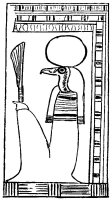
Gatekeeper. ERTAT-SEBANQA.

IV. Gate. SEKHEMET-TESU-HENT-TAUI-HETCHET-KHEFTI-NU-URT-AB-ARIT-SARU-SHUT-EM-AU.
Gatekeeper. NEKAU.

V. Gate. NEBT-REKHU-RESHT-TEBHET-TATU-AN-AQ-ERES-UN-TEP-F.
Gatekeeper. HENTI-REQU.

VI. Gate. NEBT-SENKET-AAT-HEMHEMET-AN-REKH-TU-QA-S-ER-USEKH-S-AN-QEMTU-QET-S-EM-SHAA-AU-HEFU-HER-S-AN-REKH-TENNU-MES-EN-THU-KHER-HAT-URTU-AB.
Gatekeeper. SMAMTI.

VII. Gate. AKKIT-HEBSET-BAK-AAKEBIT-MERT-SEHAP-KHAT.
Gatekeeper. AKENTI.

VIII. Gate. REKHET-BESU-AKHMET-TCHAFU-SEPT-PAU-KHAT-TET-SMAM-AN-NETCHNETCH-ATET-SESH-HER-S-EN-SENT-NAH-S.
Gatekeeper. KHU-TCHET-F.

IX. Gate. AMT-HAT-NEBT-USER-HERT-AB-MESTET-NEB-S-KHEMT-SHAA-. . . .-EM-SHEN-S-SATU-EM-UATCHET-QEMA-THESET-BES-HEBSET-BAK-FEQAT-NEB-S-RA-NEB.
Gatekeeper. TCHESEF.

X. Gate. QAT-KHERU-NEHESET-TENATU-SEBHET-ER-QA-EN-KHERU-S-NERT-NEBT-SHEFSHEFT-AN-TER-S-NETET-EM-KHENNU-S.
Gatekeeper. SEKHEN-UR.

XI. Gate. NEMT-TESU-UBTET-SEBAU-HENT-ENT-SEBKHET-NEBT-ARU-NES-AHEHI-HRU-EN-ANKHEKH.

XII. Gate. NAST-TAUI-SI-SEKSEKET-NEMMATU-EM-NEHEPU-QAHIT-NEBT-KHU-SETEMTH-KHERU-NEB-S.

XIII. Gate. STA-EN-ASAR-AAUI-F-HER-S-SEHETCHET-HAP-EM-AMENT-F.

XIV. Gate. NEBT-TENTEN-KHEBT-HER-TESHERU-ARU-NES-HAKER-HRU-EN-SETEMET-AU.

XV. Gate. BATI-TESHERU-QEMHUT-AARERT-PERT-EM-KERH-SENTCHERT-SEBA-HER-QABI-F-ERTAT-AAUI-S-EN-URTU-AB-EM-AT-F-ART-ITET-SHEM-S.

XVI. Gate. NERUTET-NEBT-AATET-KHAA-KHAU-EM-BA-EN-RETH-KHEBSU-MIT-EN-RETH-SERT-PER-QEMAMET-SHAT.

XVII. Gate. KHEBT-HER-SENF-AHBIT-NEBT-UAUIUAIT.

XVIII. Gate. MER-SETAU-AB-ABTU-MERER-S-SHAT-TEPU-AMKHIT-NEBT-AHA-UHSET-SEBAU-EM-MASHERU.

XIX. Gate. SERT-NEHEPU-EM-AHA-S-URSH-SHEMMET-NEBT-USERU-ANU-EN-TEHUTI-TCHESEF.

XX. Gate. AMT-KHEN-TEPEH-NEB-S-HEBS-REN-S-AMENT-QEMAMU-S-THETET-HATI-EN-AM-S.

XXI. Gate. TEM-SIA-ER-METUU-ARI-HEMEN-HAI-NEBAU-S.

From the above lists, and from copies of them which are found in the Papyrus of Ani, and other finely illustrated Books of the Dead, it is quite clear that, according to one view, Sekhet-Aaru, the land of the blessed, was divided into seven sections, each of which was entered through a Gate having three attendants, and that, according to other traditions, it had sections varying in number from ten to twenty-one, for each of the Gates mentioned above must have been intended to protect a division. It will be noted that the names of the Ten Gates are in reality long sentences, which make sense and can be translated, but there is little doubt that under the XVIIIth Dynasty these sentences were used as purely magical formula, or words of power, which, provided the deceased knew how to pronounce them, there was no great need to understand. In other words, it was not any goodness or virtue of his own which would enable him to pass through the Gates of Sekhet-Aaru, and disarm the opposition of their warders, but the knowledge of certain formula, or words of power, and magical names. We are thus taken back to a very remote period by these ideas, and to a time when the conceptions as to the abode of the blessed were of a purely magical character; the addition of pictures to the formula, or names, belongs to a later period, when it was thought right to strengthen them by illustrations. The deceased, who not only possessed the secret name of a god or demon, but also a picture of him whereby he could easily recognize him when he met him, was doubly armed against danger.

In addition to the Seven Arits, and the Ten, Fourteen, or Twenty-one Gates (according to the manuscript authority followed), the Sekhet-Hetepet possessed Fourteen or Fifteen Aats, or Regions, each of which was presided over by a god. 

Their names, as given in the Papyrus of Nu, are as follows:--

Aat I. AMENTET wherein a man lived on cakes and ale; its god was AMSU-QET, or MENU-QET.

Aat II. SEKHET-AARU. Its walls are of iron. The wheat here is five cubits high, the barley is seven cubits high, and the Spirits who reap them are nine cubits high. The god of this Aat is RA-HERUKHUTI.

Aat III. AATENKHU. Its god was OSIRIS or RA.

Aat IV. TUI-QAUI-AAUI. Its god was SATI-TEMUI.

Aat V. AATENKHU. The Spirits here live upon the inert and feeble. Its god was probably OSIRIS.


Aat VI. AMMEHET, which is presided over either by SEKHER-AT or SEKHER-REMUS. This was sacred to the gods, the Spirits could not find it out, and it was accursed for the dead.

Aat VII. ASES, a region of burning, fiery flame, wherein the serpent REREK lives.

Aat VIII. HA-HETEP, a region containing roaring torrents of water, and ruled over by a god called QA-HA-HETEP. A variant gives the name of this Aat as HA-SERT, and that of its god as FA-PET.


Aat IX. AKESI, a region which is unknown even to the gods; its god was MAA-THETEF, and its only inhabitant is the "god who dwelleth in his egg."
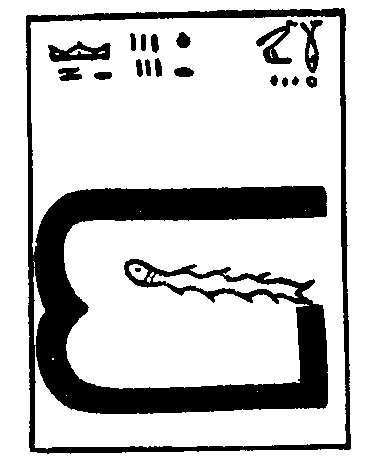
Aat X. NUT-ENT-QAHU, i.e., the city of Qahu. It was also known by the name APT-ENT-QAHU. The gods of this region appear to have been NAU, KAPET, and NEHEB-KAU.

Aat XI. ATU, the god of which was SEPT (Sothis).

Aat XII. UNT, the god of which was HETEMET-BAIU; also called ASTCHETET-EM-AMENT.

Aat XIII. UART-ENT-MU: its deity was the hippopotamus-god called HEBT-RE-F.

Aat XIV. The mountainous region of KHER-AHA, the god of which was HAP, the Nile.

A brief examination of this list of Aats, or Regions, suggests that the divisions of Sekhet-hetepet given in it are arranged in order from south to north, for it is well known that Amentet, the first Aat, was entered from the neighbourbood of Thebes, and that the last-mentioned Aat, i.e., Kher-aha, represents a region quite close to Heliopolis; if this be so, Sekhet-Aaru was probably situated at no great distance from Abydos, near which was the famous "Gap" in the mountains, whereby the spirits of the dead entered the abode set apart for them. We see from this list also that the heaven provided for the blessed was one such as an agricultural population would expect to have, and a nation of farmers would revel in the idea of living among fields of wheat and barley, the former being between seven and eight feet, and the latter between nine and ten feet high. The spirits who reaped this grain are said to have been nine cubits, i.e., over thirteen feet, in height, a statement which seems to indicate that a belief in the existence of men of exceptional height in very ancient days was extant in Egypt traditionally.

Other facts to be gleaned from the list of Aats concerning Sekhet-Aaru are that:--1. One section at least was filled with fire. 2. Another was filled with rushing, roaring waters, which swept everything away before them. 3. In another the serpent Rerek lived. 4. In another the Spirits lived upon the inert and the feeble. 5. In another lived the "Destroyer of Souls." 6. The great antiquity of the ideas about the Aats is proved by the appearance of the names of Hap, the Nile-god, Sept, or Sothis, and the Hippopotamus-goddess, Hebt-re-f, in connection with them.

The qualification for entering the Aats was not so much the living of a good life upon earth as a knowledge of the magical figures which represented them, and their names; these are given twice in the Papyrus of Nu, and as they are of great importance for the study of magical pictures they have been reproduced above.

Of the general form and the divisions of Sekhet-Aaru, or the "Field of Reeds," and Sekhet-hetepet, or the "Field of Peace," thanks to the funeral papyri of the XVIIIth Dynasty, much is known, and they may now be briefly described. From the Papyrus of Nebseni we learn that Sekhet-hetep was rectangular in shape, and that it was intersected by canals, supplied from the stream by which the whole region was enclosed. In one division were three pools of water, in another four pools, and in a third two pools; a place specially set apart was known as the "birthplace of the god of the region," and the "great company of the gods in Sekhet-hetep" occupied another section of it. At the end of a short canal was moored a boat, provided with eight oars or paddles, and each end of it terminated in a serpent's head; in it was a flight of steps. The deceased, as we see, also possessed a boat wherein he sailed about at will, but its form is different from that of the boat moored at the end of the canal. The operations of ploughing, and of seed-time and harvest, are all represented. As to the deceased himself, we see him in the act of offering incense to the "great company of the gods," and he addresses a bearded figure, which is intended probably to represent his father, or some near relation; we see him paddling in a boat, and also sitting on a chair of state smelling a flower, with a table of offerings before him. None of the inscriptions mentions Sekhet-Aaru, but it is distinctly said that the reaping of the grain by the deceased is taking place in Sekhet-hetep, or Sekhet-hetepet.

In chronological order the next picture of Sekhet-hetepet to be considered is that from the Papyrus of Ani, and it will be seen at a glance that in details it differs from that already described. Ani adores the gods in the first division, but he burns no incense; the boat in which he paddles is loaded with offerings, and he is seen dedicating an offering to the bearded figure. The legend reads, "Living in peace in Sekhet--winds for the nostrils." The second division contains scenes of' reaping and treading out of corn, but only three pools of water instead of four. In the third division we see An! ploughing the land by the side of a stream of untold length and breadth, which is said to contain neither fish nor worms. It is important to note that this division is described as SEKHET-AANRU. The eyot which represents the birthplace of the god of the city has no title, and the larger island, which is separated from it by a very narrow strip of ground, contains a flight of steps, but no gods. In the left-hand corner is a place which is described as "the seat of the Spirits, who are seven cubits in height"; the "grain is three cubits high, and it is the perfect Spirits who reap it." In the other portion of this section are two boats instead of one as in the Papyrus of Nebseni.

In connection with the two pictures of Sekhet-hetepet described above, it is important to consider the text which accompanies the older of them, i.e., that of the Papyrus of Nebseni. The deceased is made to say that he sails over the Lake of Hetep (i.e., Peace) in a boat which he brought from the house of Shu, and that he has come to the city of Hetep under the favour of the god of the region, who is also called Hetep. He says, "My mouth is strong, I am equipped [with words of power to use as weapons] against the Spirits let them not have dominion over me. Let me be rewarded with thy fields, O thou god Hetep. That which is thy wish do, O lord of the winds. May I become a spirit therein, may I eat therein, may I drink therein, may I plough therein, may I reap therein, may I fight therein, may I make love therein, may my words be powerful therein, may I never be in a state of servitude therein, and may I be in authority therein . . . . . . [Let me] live with the god Hetep, clothed, and not despoiled by the 'lords of the north,' and may the lords of divine things bring food unto me. May he make me to go forward and may I come forth; may he bring my power to me there, may I receive it, and may my equipment be from the god Hetep. May I gain dominion over the great and mighty word which is in my body in this my place, and by it I shall have memory and not forget." The pools and places in Sekhet-hetepet which the deceased mentions as having a desire to visit are UNEN-EM-HETEP, the first large division of the region; NEBT-TAUI, a pool in the second division; NUT-URT, a pool in the first division; UAKH, a pool in the second division, where the kau, or "doubles," dwell; TCHEFET, a portion of the third division, wherein the deceased arrays himself in the apparel of Ra; UNEN-EM-HETEP, the birthplace of the Great God; QENQENTET, a pool in the first division, where he sees his father, and looks upon his mother, and has intercourse with his wife, and where he catches worms and serpents and frees himself from them; the Lake of TCHESERT, wherein he plunges, and so cleanses himself from all impurities; HAST, where the god ARI-EN-AB-F binds on his head for him; USERT, a pool in the first division, and SMAM, a pool in the third division of Sekhet-hetepet. Having visited all these places, and recited all the words of power with which he was provided, and ascribed praises to the gods, the deceased brings his boat to anchor, and, presumably, takes up his abode in the Field of Peace for ever.

From the extract from the Chapter of Sekhet-Aaru and Sekhet-hetepet given above, it is quite clear that the followers of Osiris hoped and expected to do in the next world exactly what they had done in this, and that they believed they would obtain and continue to live their life in the world to come by means of a word of power; and that they prayed to the god Hetep for dominion over it, so that they might keep it firmly in their memories, and not forget it. This is another proof that in the earliest times men relied in their hope of a future life more on the learning and remembering of a potent name or formula than on the merits of their moral and religious excellences. From first to last throughout the chapter there is no mention of the god Osiris, unless he be the "Great God" whose birthplace is said to be in the region Unen-em-hetep, and nowhere in it is there any suggestion that the permission or favour of Osiris is necessary for those who would enter either Sekhet-Aaru or Sekhet-hetep. This seems to indicate that the conceptions about the Other World, at least so far as the "realms of the blest" were concerned, were evolved in the minds of Egyptian theologians before Osiris attained to the high position which he occupied in the Dynastic Period. On the other hand, the evidence on this point which is to be deduced from the Papyrus of Ani must be taken into account.

At the beginning of this Papyrus we have first of all Hymns to Ra and Osiris, and the famous Judgment Scene which is familiar to all. We see the heart of Ani being weighed in the Balance against the symbol of righteousness in the presence of the Great Company of the Gods, and the weighing takes place at one end of the house of Osiris, whilst Osiris sits in his shrine at the other. The "guardian of the Balance" is Anubis, and the registrar is Thoth, the scribe of the gods, who is seen noting the result of the weighing. In the picture the beam of the Balance is quite level, which shows that the heart of Ani exactly counterbalances the symbol of righteousness. 

This result Thoth announces to the gods in the following words, "In very truth the heart of Osiris hath been weighed, and his soul hath stood as a witness for him; its case is right (i.e., it hath been found true by trial) in the Great Balance. No wickedness hath been found in him, he hath not purloined the offerings in the temples, and he hath done no evil by deed or word whilst he was upon earth." The gods in their reply accept Thoth's report, and declare that, so far as they are concerned, Ani has committed neither sin nor evil. 

Further, they go on to say that he shall not be delivered over to the monster Amemet, and they order that he shall have offerings, that he shall have the power to go into the presence of Osiris, and that he shall have a homestead, or allotment, in Sekhet-hetepet for ever. We next see Ani being led into the presence of Osiris by Horus, the son of Isis, who reports that the heart of Ani hath sinned against no god or goddess; as it hath also been found just and righteous according to the written laws of the gods, he asks that Ani may have cakes and ale given to him, and the power to appear before Osiris, and that he may take his place among the "Followers of Horus," and be like them for ever.

Now from this evidence it is clear that Ani was considered to have merited his reward in Sekhet-hetepet by the righteousness and integrity of his life upon earth as regards his fellow-man, and by the reverence and worship which he paid to every god and every goddess; in other words, it is made to appear that he had earned his reward, or had justified himself by his works. Because his heart had emerged triumphantly from its trial the gods decreed for him the right to appear in the presence of the god Osiris, and ordered him to be provided with a homestead in Sekhet-hetep. There is no mention of any repentance on Ani's part for wrong done; indeed, he says definitely, "There is no sin in my body.

I have not uttered wittingly that which is untrue, and I have committed no act having a double motive [in my mind]." As he was troubled by no remembrance of sin, his conscience was clear, and he expected to receive his reward, not as an act of mercy on the part of the gods, but as an act of justice. Thus it would seem that repentance played no part in the religion of the primitive inhabitants of Egypt, and that a man atoned for his misdeeds by the giving of offerings, by sacrifice, and by worship. On the other hand, Nebseni is made to say to the god of Sekhet-hetep, 

"Let me be rewarded with thy fields, O Hetep; but do thou according to thy will, O lord of the winds." 

This petition reveals a frame of mind which recognizes submissively the omnipotence of the god's will, and the words "do thou according to thy will" are no doubt the equivalent of those which men of all nations and in every age have prayed--

"Thy will be done."

The descriptions of the pictures of Sekhet-hetep given above make it evident that the views expressed in the Papyrus of Nebseni differ in some important details from those which we find in the Papyrus of Ani, but whether this difference is due to some general development in religious thought, which took place in the interval between the periods when the papyri were written, cannot be said. There is abundant evidence in the Papyrus of Ani that Ani himself was a very religious man, and we are not assuming too much when we say that he was the type of a devout worshipper of Osiris, whose beliefs, though in some respects of a highly spiritual character, were influenced by the magic and gross material views which seem to have been inseparable from the religion of every Egyptian. 

Though intensely logical in some of their views about the Other World, the Egyptians were very illogical in others, and they appear to have seen neither difficulty nor absurdity in holding at the same time beliefs which were inconsistent and contradictory. It must, however, in fairness be said that this characteristic was due partly to their innate conservatism in religious matters, and their respect for the written word, and partly to their fear that they might prejudice their interests in the future life if they rejected any scripture or picture which antiquity, or religious custom, or tradition had sanctioned.

Certain examples, however, prove that the Egyptians of one period were not afraid to modify or develop ideas which had come down to them from another, as may be seen from the accompanying illustration.


This picture is intended to represent Sekhet-hetepet, and is taken from the inner coffin of Kua-Tep, which was found at Al-Barsha, and is now in the British Museum (No. 30,840); it dates front the period of the XIth Dynasty. From this we see that the country of the blessed was rectangular in shape, and surrounded by water, and intersected by streams, and that, in addition to large tracts of land, there were numbers of eyots belonging to it. In many pictures these eyots are confounded with lakes, but it is pretty clear that the "Islands of the Blessed" were either fertile eyots, or oases which appeared to be green islands in a sea of sand. Near the first section were three, near the second four, near the third four, three, being oval, and one triangular; the fourth section was divided into three parts by means of a canal with two arms, and contained the birthplace of the god, and near it were seven eyots; the fifth is the smallest division of all, and has only one eyot near it. Each eyot has a name which accorded with its chief characteristic; the dimensions of three of the streams or divisions are given, the region where ploughing takes place is indicated, and the positions of the staircase and the mystic boat are clearly shown. The name of the god Hetep occurs twice, and that of Osiris once.

If now we compare this picture with that front the Papyrus of Nebseni we shall find that the actual operations of ploughing, reaping, and treading out of the corn are depicted on the Papyrus, and that several figures of gods and the deceased have been added. The text speaks of offerings made by the deceased, and of his sailing in a boat, &c., therefore the artist added scenes in which he is depicted doing these things; and the lower part of the picture in the Papyrus has been modified considerably. In the second division it may be noted that Nebseni is seen laying both hands on the back of the Bennu bird; there is no authority for this in the older copy of the picture. 


In this illustration on which is reproduced from the coffin of Sen, in the British Museum (No. 30,841), a still simpler form of Sekhet-hetepet is seen; here we have only nine eyots, which are grouped together, and no inscription of any kind.

Still further modifications were introduced into the pictures of Sekhet-hetepet drawn in later times, and, in order that the reader may be enabled to trace some of the most striking of these, copies of Sekhet-hetepet from the Papyrus of Anhai (about B.C. 1040), and from that of Auf-ankh (Ptolemaïc Period)

Tuesday, December 5, 2017

Lecture: The Djed


The djed is an ancient Egyptian symbol for stability which features prominently in Egyptian art and architecture throughout the country's history. `Stability' should be understood to mean not only a firm footing but immutability and permanence. The symbol is a column with a broad base which narrows as it rises to a capital and is crossed by four parallel lines. The column and the lines are sometimes brightly painted and other times monochrome. The djed first appears in the Predynastic Period in Egypt (c. 6000-3150 BCE) and continues through the Ptolemaic Dynasty (323-30 BCE), the last dynasty to rule Egypt before it became a province of the Roman Empire.

The djed is often overlooked in Egyptian art, and especially in architecture, simply because it is so ubiquitous; the djed is featured on pillars, tomb walls, architraves (the main beam which rests on pillars), palace walls, sheets of painted papyrus, and especially sarcophagi. Once one is aware of the djed and its importance to ancient Egyptian culture it is impossible to miss. It is a potent symbol associated with the god Osiris and his return from the dead. The symbol has been interpreted to represent different objects such as the god Osiris' backbone, the tamarisk tree which enclosed the god, four pillars rising one behind another, and a fertility pole raised at festivals. `Stability', however, seems to have been its prime meaning and the one which the ancient Egyptians attached the greatest importance to.


MEANING & ORIGINS

The precise origin of the djed is unknown but it was associated with the god Ptah, an early creator god in the Predynastic Period whose attributes were later assumed by the deities Atum and Osiris. According to historian Clare Gibson, the djed was an early phonogram which could also act as a pictogram or ideogram. A phonogram is a symbol representing a sound and a pictogram a symbol for a specific word or phrase while an ideogram is a symbol of a thing itself without reference to words or sounds (such as numerals where one recognizes the symbol 10 as representing a certain quantity). The djed symbolized the spoken word-concept for stability, was the written word for stability, and stood for the concept itself.

THE DJED SYMBOLIZED THE SPOKEN WORD-CONCEPT FOR STABILITY, WAS THE WRITTEN WORD FOR STABILITY, AND STOOD FOR THE CONCEPT ITSELF.

In the Predynastic Period it may have originally been a representation of a fertility pole upon which sheaves of grain were suspended at festivals. This pole may have been a feature of early fertility rituals which eventually came to be associated with the god who made the land fertile. The god Ptah carried a sceptre which combined the djed and the Ankh (symbol of life) and is referenced as "The Noble Djed" in ancient inscriptions. The Djed Pillar Festival was held annually at which an actual djed pillar was built and raised by the local priesthood on the first day of the harvest season. Raising the pillar may have originally symbolized the grains rising from the earth but, in time, came to represent the god Osiris returning from the dead.

With the rise of the cult of Osiris, the djed came to be firmly associated with him and, especially, with the tree of Byblos which enclosed him and the pillar made from that tree. The djed also symbolized the backbone of Osiris in that, just as Osiris rose from the dead, the deceased would rise from their body after death. In the same way that the human backbone allowed one to sit up and stand and walk, the spiritual image of Osiris' backbone would encourage the soul to rise up from the body and move toward the afterlife. The myth of Osiris was one of the most popular in ancient Egypt, especially in the period of the New Kingdom (1570-1069 BCE). The story details the death of the god, his resurrection by his wife Isis, and descent to the underworld to reign as Lord of the Dead.


THE MYTH OF OSIRIS

In the beginning of time, shortly after creation, the gods Osiris, Isis, Set, Nepthys, and Horus were born of the union between Geb (earth) and Nut (sky). Osiris, as the eldest, was given reign of the earth and took his sister Isis as his wife and queen. Set grew jealous of Osiris' success and trapped him in a coffin which he then threw into the Nile River. The coffin floated to the Phoenician city of Byblos where it became lodged in a tamarisk tree by the shore. The tree quickly grew around and enclosed the coffin within it. The king and queen of Byblos noticed the tree and that it gave forth a sweet scent and so had it cut down and brought to their palace to decorate the court as a central pillar.

Isis, in the meantime, had gone searching for her missing husband and finally arrived at the court of Byblos. Disguised as an older woman, she ingratiated herself to the royal family by teaching the handmaidens how to plait their hair and became nursemaid to the young princes. Isis was particularly fond of the younger child, Dictys, and tried to make him immortal by burning away his mortal part in a flame. When the queen found her doing this one night she became upset and Isis threw off her disguise to reveal herself as a goddess. The royal couple begged her mercy for their affrontery and promised her anything she wanted; Isis claimed the tree which held her husband.

She freed Osiris' body from the tree and brought him back to Egypt to revive him but, while she was out gathering the necessary herbs, Set found the body, cut it into pieces, and scattered it across the land. When Isis found her husband had been dismembered she instantly set about collecting his remains with the help of her sister Nepthys. They found all his body parts, except for his penis which had been eaten by a fish, and he was brought back to life. Isis transformed herself into a kite and summoned the seed from Osiris' body by flying around him, drawing the seed into herself and becoming pregnant with a son, Horus. Osiris, since he was not complete, could no longer rule the living and descended to the underworld as Lord of the Dead. Horus grew to maturity and then challenged Set for rule, defeating him and restoring order to the land. The myth illustrated the importance of ma'at(harmony) and the triumph of order over chaos.

"I am He of the Djed pillar 
the son of He of the Djed pillar 
I was conceived in Djedu 
I was born in Djedu"

Hieroglyphic usage


R11

ḏd
in hieroglyphs

The djed hieroglyph was a pillar-like symbol that represented stability. It was also sometimes used to represent Osiris himself, often combined "with a pair of eyes between the crossbars and holding the crook and flail."The djed hieroglyph is often found together with the tyet (also known as Isis knot) hieroglyph, which is translated as life or welfare. The djed and the tiet used together may depict the duality of life. The tyet hieroglyph may have become associated with Isis because of its frequent pairing with the djed.


Ceremonial usage

The djed pillar was an important part of the ceremony called 'raising the djed,' which was a part of the celebrations of Heb Sed, the Egyptian pharaoh's jubilee celebrations. The act of raising the djed has been explained as representing Osiris's triumph over Set. Ceremonies in Memphis are described where the pharaoh, with the help of the priests, raised a wooden djed column using ropes. The ceremony took place during the period when fields were sown and the year's agricultural season would begin corresponding to the month of Choiak, the fourth month of the inundation season called akhet. This ceremony was a part of one of the more popular holidays and celebrations of the time, a larger festival dedicated to Osiris conducted from the 13th to 30th day of the Choiak month. Celebrated as it was at that time of the year when the soil and climate were most suitable for agriculture, the festival and its ceremonies can be seen as an appeal to Osiris, who was the God of vegetation, to favor the growth of the seeds sown, paralleling his own resurrection and renewal after his murder by Seth.

Further celebrations surrounding the raising of the djed are described in a relief in Amenhotep III's Luxor Temple. In the tomb in the temple, the scene shows the raising of the djed pillar taking place in the morning of Amenhotep III's third Heb-Sed, which took place in his thirty-seventh regnal year. The scene is described by Sigrid Hodel-Hoenes:


The anthropomorphized pillar stands at the middle left, in a shrine. It has taken the shape of a human body with the djed-pillar as its head; the eyes are udjat-eyes. The hands hold the crook and flail, the usual insignia of Osiris, the god of the dead. On its head is the tall feather crown with the solar disk. The pillar is on a high base reminiscent of the platforms visible today in many temples, on which the cult barks once stood. In front of and behind it are lotus and papyrus blossoms. Beneath the large slab of the base are two tall offering stands – one bears a libation vessel, while flowers have been laid on the other. To the right is the king himself, presenting a generously laid table. Fowl, cucumbers, blossoms, breads, and heads and ribs of beef are all lying on the upper mat, while a cow and an antelope can be seen on the lower one. Beneath these mats are four tall vessels containing unguents and oil, with bundles of lettuce sticking out among them. The vulture goddess, Wadjyt, the Mistress of the Per-nu shrine, has spread her protective wings above the sovereign, with the blue crown on his head.

— Sigrid Hodel-Hoenes, Life and death in ancient Egypt : scenes from private tombs in new kingdom Thebes, p. 222

There is also a scene depicted in the tomb to the right of the above scene which has not been well preserved. Hodel-Hoenes explains that it once showed the pharaoh, accompanied by his queen, using a rope to raise the djed pillar. Three men, probably priests of the temple of Memphis, help him in the process. A fourth priest was seen supporting the pillar. Various offerings were presented before the pillar below the ropes. Both the pharaoh and his queen are each accompanied by four pairs of young women resembling those of the sed-festival. Each of these women is rattling a Hathor sistrum, a musical instrument for percussion with a U-shaped handle and frame seen as resembling the face and horns of the cow goddess Hathor, while holding a menat, a protective amulet associated with Hathor, in the other hand. A line of hieroglyphs running just above the girls' heads in each row of women says, "Children of the king praising (or charming) the noble djed pillar." Hodel-Hoenes interprets this as identifying the girls as the daughters of Amenhotep III.

There are three additional reliefs below these two reliefs. They depict further ceremonies that accompany the erection of the djed pillar, especially games and dances. In one, food-bearers carrying edibles weave between men dancing with heavy steps. A line of singers on the far left seems to sing a short hymn to Ptah, the text of which is written alongside the line. Singing and dancing girls can be seen in the next relief, though Hodel-Hoenes comments on their seeming lack of grace, saying, "only the raised hands and the foot swinging in the air hint at the movements of a dance." The relief also depicts men involved in a boxing match and a cane dance, sports and dances which can still be seen in Egypt today.

The festival of the raising of the djed also involved re-enactments conducted at Denderah, Edfu, Busiris, Memphis, and Philae. But the most elaborate and grand celebration occurred at Abydos, the cult center of Osiris. From around the end of the third millennium BC during the beginning of the Twelfth Dynasty and perhaps as early as the Sixth Dynasty three hundred years earlier, re-enactments of the myth of Osiris and Isis – the deception and murder of Osiris by Seth, the search for Osiris by Isis and Osiris' mummification, funeral and his resurrection were performed. From the late fourth century BC, a recitation of the Lamentations of Isis and Nephthys, a poem describing Isis and Nephthys' search for Osiris, was added to the ceremony on the 25th day of the Choiak month. At the Osiris Temple in Abydos, these re-enactments are described as involving hundreds of priests and priestesses in the roles of the gods and goddesses, with 34 papyrus boats carrying the gods, a sculpture of Osiris inside an elaborate chest, 365 ornamental lamps, incense, and dozens of djed amulets.


Usage as amulets


The djed pillar was often used as amulets for the living and the dead. It was placed as an amulet near the spines of mummified bodies, which was supposed to ensure the resurrection of the dead, allowing the deceased to live eternally. The Egyptian Book of the Dead lists a spell which when spoken over a gold amulet hung around the mummy's neck, ensures that the mummy would regain use of its spine and be able to sit up. It was also painted onto coffins.

Parallels in other cultures

Parallels have also been drawn between the djed pillar and various items in other cultures. Sidney Smith in 1922, first suggested a parallel with the Assyrian "sacred tree" when he drew attention to the presence of the upper four bands of the djed pillar and the bands that are present in the center of the vertical portion of the tree. He also proposed a common origin between Osiris and the Assyrian god Assur with whom he said, the sacred tree might be associated. Cohen and Kangas suggest that the tree is probably associated with the Sumerian god of male fertility, Enki and that for both Osiris and Enki, an erect pole or polelike symbol stands beneath a celestial symbol. They also point out that the Assyrian king is depicted in proximity to the sacred tree, which is similar to the depiction of the pharaoh in the raising of the djed ceremony. Additionally, the sacred tree and the Assyrian winged disk, which are generally depicted separately, are combined in certain designs, similar to the djed pillar which is sometimes surmounted with a solar disk. Katherine Harper and Robert Brown also discuss a possible strong link between the djed column and the concept of kundalini in yoga.


Monday, November 6, 2017

Lecture: Egyptian Concept of God and the gods Part 2

The Primitive God

The worship of the gods (neteru), which began far away back in pre-dynastic times, continued through the archaic and dynastic periods, and lasted until the IVth or Vth century of our era; it is tolerably certain that in respect of some of them the ideas of the Egyptians never changed, but, as regards others, their views did not remain as constant as some writers would have us imagine. In the earliest days every village community in Egypt had its local god, who shared the good or evil fortune of the community to which he belonged.
His emblem or symbol was carried out to war, and was, of course, present at all great public gatherings when matters connected with the welfare of his devotees were discussed. A special habitation was set apart for him, and its upkeep was provided for out of common funds. As the riches of the people of the village increased, the rank and dignity of their god kept pace with them, but his revenues suffered in times of scarcity, and defeat, and war; his emblem might even be carried off into captivity and burnt, or smashed, when, of course, the spirit which dwelt in his symbol was also destroyed.
The number of such early gods was legion, for many large communities possessed several gods, each of which was famed locally for some particular attribute. When a man left one village and settled in another he took his god or gods with him, but he would be obliged to acknowledge the god of the village or city in which he had made his new abode, and to contribute towards the maintenance of his house and its small compound.
The reduction in the number of the gods of Egypt began when man first realized that certain gods were mightier than others, for he ceased gradually to worship those who had, in his opinion, failed to justify his belief in them, and transferred his allegiance to the gods who were able to give him the most help. In process of time the god or goddess of a certain village or town would obtain a fame and reputation for power which would outrival those of the deities of the neighbouring cities, and the growth of the worship of such god or goddess would be accompanied by a corresponding decline in that of the gods in the towns round about.
The gods, in the first instance, grew by a process of selection out of the spirits who were well disposed towards man and were helpful to him, and the “great gods” of the Egyptians were evolved, practically, in a somewhat similar manner. It is at present hopeless to attempt to enumerate all the gods who were, from first to last, worshiped by the Egyptians, for it will not be possible to do this until every text extant has been published.
Meanwhile an examination of the earliest Egyptian religious literature known to us proves that a number of gods who were of some importance in the polytheistic system of the Early Empire dropped out from it long before the period of the New Empire, and thus it is very doubtful if we shall ever be able to collect the names of all the gods who have been worshiped in the Valley of the Nile between the Archaic and Roman periods, whilst to make a list of all the pre-dynastic gods is manifestly impossible.

Selection Of Gods

Future discoveries in Egypt may produce texts that will tell us which were the favorite gods in the archaic period and give us some idea as to the pronunciation of their names, for we have reason to think that during the greater part of that period the Egyptians were able to write. If ever such texts are brought to light we shall probably find that the gods who were worshiped during the archaic period were those who were popular in the pre-dynastic period, just as we find that the gods of the Egyptians of the Middle and New Empires were to all intents and purposes the same as those of the Egyptians of the Early Empire.
Speaking generally, it may be said that the Egyptians of the greater part of the dynastic period of their history invented few new gods, and that they were well content to worship such deities as were known to their ancestors ; we know that they admitted, at times, foreign gods into the assembly of the old Egyptian gods, but the religious texts prove that they were never allowed to usurp the functions of the indigenous gods.
Political and other reasons might secure for them a certain amount of recognition in the country generally, and the people of the cities where their emblems and statues found resting-places treated them with the easy toleration which is so marked a characteristic of many countries in the East; but as soon as such reasons disappeared the foreign gods were quietly ignored, and in a short time their worship was forgotten. This statement is not intended to apply to the gods who were introduced from one city or district of Egypt into another, for we know that the Egyptian priesthood and people of a given city were ready to show hospitality to almost any god of any town, or city, or district, provided that he belonged to the same company as that of which the chief local god was a member.

Gods Of The Earliest Dynasties

We have, unfortunately, no long connected religious texts in the forms in which they must have existed under the first four dynasties, and we cannot therefore say what gods were worshiped during that period. There is, as has been shown elsewhere, good reason for believing that some parts of the Book of the Dead were revised or edited during the early part of the period of the 1st Dynasty, and if this be so we may assume that the religious system of the Egyptians as revealed in the texts of a much later time closely resembled that which was in existence in the later part of the archaic period, i.e., during the first three dynasties.
Under the Vth and VIth Dynasties we touch firmer ground, and we find abundant, though not complete, materials for the study of the gods of Egypt and their attributes in the lengthy hieroglyphic texts which were inscribed inside the pyramid tombs of Unȧs, Tetȧ, Pepi I., Mer-en-Rā-Meḥti-em-sa-f, and Pepi II.
An examination of these texts reveals the existence of an established theological system in Egypt, and we find that even at that time the literature in which it was, more or less, expounded, contained innumerable layers of religious thought and expressions of belief which belonged to periods many of which must have been separated by long intervals of time. The gods are mentioned in such a way as to prove that the writers of the texts, or at least the copyists, assumed that the reader would be well acquainted with the subject matter of the compositions, and from first to last neither explanation nor gloss is to be found in them. The texts are, of course, sepulchral, and the greater number of the gods mentioned in them are referred to in their characters as gods who deal with the souls of the dead in the world beyond the grave.
The Sun-god Rā and the gods of his cycle, and Osiris, the god and judge of the dead, and the gods of his cycle, have definite positions and duties assigned to them, and it is very clear that both the texts which describe these and the ceremonies which were performed in connection with the words recited by the priests were, even under the Vth Dynasty, extremely ancient. Moreover, it is certain that the religious texts in use for funeral purposes under that dynasty are substantially those which were compiled several centuries before.
We may note in passing that the funeral books were edited by the priests of Annu or Anu, i.e., Heliopolis, and as a result they exhibit traces of the influence of the theological opinions of the great priestly college of that city ; but at bottom the views and beliefs which may be deduced from them, and the fundamental conceptions to which they give expression are the products of the minds of the pre-dynastic, indigenous Egyptians. To the consideration of the Heliopolitan religious system we shall return later, and we may therefore pass on to the enumeration of the principal gods who are made known to us by the Pyramid Texts at Ṣaḳḳâra.

Gods Of The Archaic Period

Among the great gods who were certainly worshiped in the early archaic period may be mentioned:—
Ptaḥ (Tetȧ 88)
Gods1 628
Nu (Unȧs 199)
Gods1 630
Net, or Neith (Unȧs 67)
Gods1 632
Rā (passim)
Gods1 633
Ḥet-Ḥeru (Hathor)
Gods1 634
Ḥeru, or Horus (Mer-en-Rā 454)
Gods1 629
Kheper } (Unȧs 444)
Gods1 631
Kheprer } (Pepi II. 856)
Gods1 626
Khnemu (Unȧs 556)
Gods1 627
Sebek (Unȧs 565)
Gods1 635

Of these gods Heru, or Horus, was the hawk-god, i.e., the spirit and personification of the “height” of heaven;
Kheper was the beetle-god ;
Khnemu the ram-god ;
and Sebek the crocodile-god ;
Net or Neith was originally a wood-spirit,
Rā and Ptah were two forms of the Sun-god,
and Nu was the watery mass of heaven in which he lived.
With Rā and Kheper the priests of Heliopolis associated the form of the Sun-god which was specially worshipped in their city, and thus we have mentioned the compound gods
  • Rā-Tem Gods1 640 (Unȧs 216, 224, Mer-en-Rā 458),
  • and Tem-KheprerGods1 641 (Pepi II. 662).
In the text of Unȧs (line 626) Sebek is styled
“son of Net,” Gods1 642,
and he is also called
“lord of Baru,” Gods1 643 (line 565);
but if the XVIIIth Dynasty texts be correct the name of this place is misspelt, andin any case it must be identical with the Bakhau, Gods1 644, or Mountain of the Sunrise of Chapter cviii. of the Book of the Dead.

Gods Of The Pyramid Texts

The following is a list of the other principal gods mentioned in the Pyramid Texts :—
Aḥu (Pepi II. 850)Gods1 658
Aker (Unȧs 498, 614, Tetȧ 309)Gods1 659
Ȧpi (Unȧs 487) ,Gods1 645
Ȧp-uat (Unȧs 187)Gods1 646
Ȧmen (Unȧs 557)Gods1 647
Ȧment (Unȧs 557)Gods1 648
Ȧm-ḥenth-f (Pepi I. 666)Gods1 662
Ȧm-sepa-f (Pepi I. 666)Gods1 663
Ȧmsu or Min (Unȧs 377)Gods1 649
Ȧmset (Tetȧ 60, 197)Gods1 650
Ȧnȧ (Unȧs 272, 275)Gods1 651
Ȧnpu (Unȧs 71, 207, 219)Gods1 652
Ȧn-mut-f (Pepi II. 772)Gods1 653
  Ȧn-tcher-f (Pepi I. 651)Gods1 660
Ȧkhet-nen-thȧ (Tetȧ 307)Gods1 661
Ȧsȧr, Osiris (passim)Gods1 654
Ȧst, Isis (Unȧs 181)Gods1 655
Ȧsken (Pepi II. 1324)Gods1 656
Ȧṭer-ȧsfet (Pepi II. 980)Gods1 664
Ānkh (Pepi I. 672)Gods1 657
I-en-ḥer-pes (Unȧs 392)Gods1 667
Uahu (Tetȧ 333)Gods1 668
Ur-sheps-f (Pepi I. 671)Gods1 669
Urt (Unȧs 272)Gods1 670
Urt-hekau (Unȧs 269)Gods1 671
Usert (Unȧs 229)Gods1 672
Uthes (Pepi II. 976)Gods1 673
Ba (Mer-en-Rā 784)Gods1 674
Babȧ (Unȧs 532)Gods1 675
Babi (Unȧs 644, 647)Gods1 676
Baȧbu (Pepi I. 568)Gods1 677
Babuȧ (Pepi I. 604)Gods1 678
Bastet (Pepi I. 569)Gods1 679
Ba-āshem-f (Mer-en-Rā 784)Gods1 680
Pent (Unȧs 280)Gods1 681
Pesetchet (Unȧs 417)Gods1 682
Maat-Khnemu (Pepi 1.445)Gods1 683
Maāt (Unȧs 220)Gods1 684
Mut (Unȧs 181)Gods1 692
The variants are:
1) Gods1 686
2) Gods1 693
Ment (Pepi II. 849)Gods1 687
Menṭef (Pepi II. 1228)Gods1 694
Menth (Mer-en-Rā 784)Gods1 695
Meḥt-urt (Unȧs 427, 623)Gods1 696
Meḥt-urt (Unȧs 427, 623)Gods1 697
Em-khent-maati (Pepi I. 645)Gods1 698
Em-khent-maati (Pepi I. 645)Gods1 699
Meskha (Unȧs 567)Gods1 688
Meskhaat (Pepi I. 671)Gods1 700
Metchetȧt (Pepi II. 956)Gods1 701
Nȧu (Unȧs 557)Gods1 702
Nubt (Unȧs 479)Gods1 689
Nebt-ḥet (Unȧs 220)Gods1 690
Nefer-Tem (Unȧs 395)Gods1 703
Enen (Unȧs 557) }Gods1 704
Enenet (Unȧs 240) }Gods1 705
Nekhben (Unȧs 459)Gods1 706
Neḥebkau (Unȧs 559)Gods1 745
Nekhebet (Mer-en-Rā 762)Gods1 746
Neḥt (Unȧs 601)Gods1 707
Nesert (Unȧs 269)Gods1 708
Neṭi (Unȧs 279)Gods1 709
Netetthȧb (Unȧs 598)Gods1 710
Renenut (Unȧs 441)Gods1 750
Ruruthȧ (Pepi II. 976, 979)Gods1 752
Hepath (Pepi I. 636)Gods1 754
Henenȧ (Pepi I. 636)Gods1 711
Hetchhetch (Pepi I. 173)Gods1 755
Heṭṭenuut (Tetȧ, 332)Gods1 757
Ḥu (Unȧs 439)Gods1 712
Ḥep (Unȧs 187)Gods1 713
Ḥep-ur (Unȧs 431)Gods1 714
Ḥep (Tetȧ 60, 197)Gods1 715
Ḥem (Pepi I. 641)Gods1 716
Ḥemen (Pepi II. 850)Gods1 717
Ḥen-pesetchti (Tetȧ 309)Gods1 744
Ḥent (Unȧs 417)Gods1 718
Ḥunt (Tetȧ 357)Gods1 719
Ḥeru (passim)Gods1 747
Ḥeru-ȧāh (Tetȧ 365)Gods1 720
Ḥeru-ȧm-henu (Unȧs 211)Gods1 748
Ḥeru-khent-peru (Unȧs 202)Gods1 749
Ḥeru-khesbetch-maati(Unȧs369)Gods1 751
Ḥeru-khutthȧ (Unȧs 471)Gods1 753
Ḥeru-Sepṭ (Unȧs 465)Gods1 721
Ḥeru-ṭesher-maati (Unȧs 369)Gods1 756
Ḥeru-ṭat (Unȧs 218)Gods1 758
Ḥeru-kharṭ (Tetȧ 301)Gods1 722
Ḥrȧ-f-ḥa-f (Pepi I.)Gods1 759
Ḥer-ḥepes (Unȧs 226)Gods1 723
Ḥesat (Pepi II. 976)Gods1 760
Ḥesmennu (Mer-en-Rā 670)Gods1 762
Ḥet-Ḥert (Unȧs 575)Gods1 724
Ḥeka (Pepi I. 583)Gods1 725
Ḥeqet (Pepi I. 570)Gods1 726
Khāȧta (Unȧs 536)Gods1 727
Khebetch (Unȧs 434)Gods1 728
Khent-Ȧmenti (Unȧs 201)Gods1 729
Khent-maati (Unȧs 218)Gods1 766
Khnemu (Unȧs 556, Pepi I. 455)Gods1 768
Khensu (Unȧs 510)Gods1 730
Khensu-Sepṭ (Unȧs 588)Gods1 771
Sȧa (Unȧs 439)Gods1 731
Sathet (Pepi I. 297)Gods1 732
Seb (Unȧs 234)Gods1 733
Sephu-urt (Pepi II. 976)Gods1 773
Sepṭ (Unȧs 219)Gods1 734
Sma-ur (Unȧs 280)Gods1 761
Smentet (Tetȧ 355)Gods1 735
Sunth (Pepi II. 854)Gods1 736
Seref-ur (Tetȧ 309)Gods1 737
Serqet (Pepi I. 647)Gods1 763
Serqet-ḥetu (Tetȧ 207)Gods1 764
Sehepu (Pepi I. 685)Gods1 738
Sekhemf (Pepi II. 978)Gods1 765
Sekhen-ta-en-ur (Unȧs 281)Gods1 767
Sekhet (Unȧs 390)Gods1 769
Sȧsha (Pepi II. 975)Gods1 770
Seker (Pepi I. 641)Gods1 739
Seksen (Pepi I. 650)Gods1 740
Set (Unȧs 6)Gods1 741
Sethȧsethȧ (Pepi I. 265)Gods1 772
Seththa (Pepi I. 259)Gods1 742
Shu (Unȧs 185)Gods1 743
Shesmu (Unȧs 511)Gods1 774
Sheskhentet (Unȧs 390)Gods1 775
Ḳenur (Pepi II. 979)Gods1 787
Ḳasut (Pepi II. 975)Gods1 789
Qebḥusennuf (Tetȧ 60)Gods1 776
Tait (Tetȧ 376)Gods1 777
Tebȧ (Unȧs 428)Gods1 778
Tefen (Unȧs 453)Gods1 779
Tefnut (Unȧs 453)Gods1 780
Tem (Unȧs 207)Gods1 781
Tem-kheprer (Pepi II. 662)Gods1 786
Tatet (Unȧs 67)Gods1 782
Ṭuamutef (Tetȧ 60)Gods1 788
Ṭenānu (Pepi I. 269)Gods1 783
Ṭenṭen (Unȧs 280)Gods1 784
Teḥuti (Unȧs 228)C2t1_4
Tchenṭ (Mer-en-Rā 773)Gods1 785
Tchenṭeru (Tetȧ 198)Gods1 790
Tchenṭtchenṭer (Pepi I. 301)Gods1 791